01
What to Wear to Weekend Brunch Without Looking Overdressed
How to build a brunch look around one favorite piece, proportion, layering and enough ease to continue through the rest of the day.
Leer artículo
A practical guide to washing, drying and ironing linen while preserving its shape, texture and drape.
Linen can handle everyday wear, but it does not respond well to excessive friction, twisting or heat. At La Troupe, the care logic for linen pieces is simple: cool or lukewarm water, a delicate cycle, mild detergent, no wringing and drying in the shade.
The specific care label always comes first. Fiber matters, but so do weave, finish, color and any embroidery or application.
Linen can lose its intended shape after inappropriate treatment, but there is no single washing method appropriate for every garment containing this fiber. Weave, blends, finishing and construction details affect the recommended approach. Before washing, check the label, look for embroidery or lining and identify stains that need particular attention. The objective is preserving drape and proportions rather than following a recipe based solely on a fiber name. A careful procedure begins with knowing the finished garment rather than assuming all linen behaves identically.
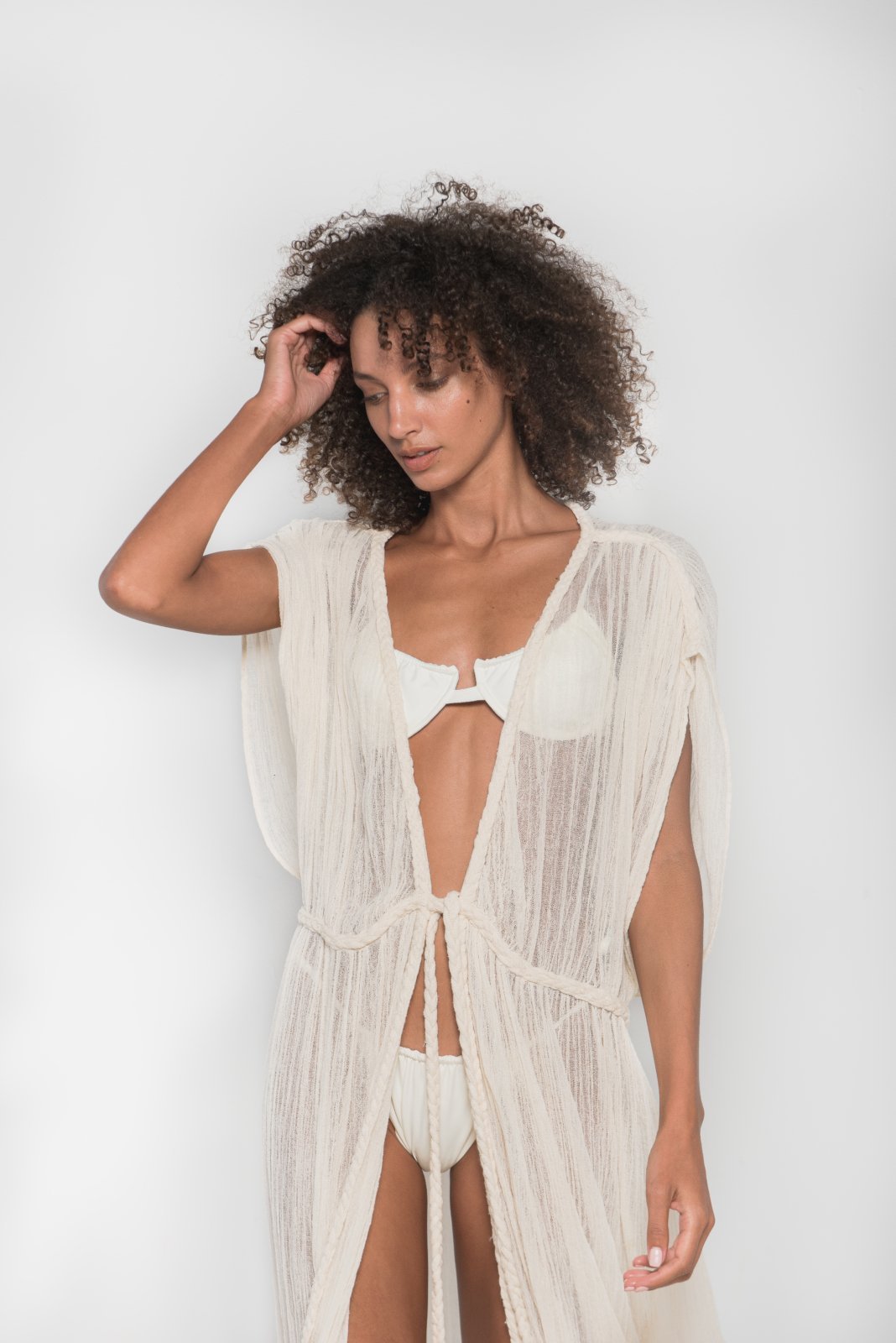
La Troupe’s linen guidance recommends hand washing or a delicate machine cycle in cool or lukewarm water, up to 30 °C. The goal is to reduce mechanical and thermal stress on the garment. On a piece such as Kimono Tao Manta Lino, that restraint helps preserve drape and keeps the silhouette from losing intention through aggressive treatment. Twisting a wet garment concentrates tension on fibers, seams and edges. Instead, press gently to remove excess water and let the fabric release moisture without force.
General advice about cool or lukewarm water cannot replace the specific care label. Some garments allow particular methods, while others contain blends or finishes requiring a different approach. The active Tao linen-manta kimono is one item whose product information should be checked before selecting a treatment. Distinguish an open textile construction from a denser one; garments sharing the same fiber may feel and respond differently. An unsuitable wash can change more than surface appearance, especially when a piece includes multiple structural details.
Natural drying in the shade reduces direct sun exposure and gives you more control over the form. Depending on construction, the garment can dry flat or hang. If the fabric is heavy with water, flat drying can reduce stretching at shoulders and hems.
Friction and twisting can place unnecessary stress on seams and particular areas of a garment. Where the care label permits washing, handle the textile with attention rather than using force to remove moisture rapidly. A specific stain deserves its own assessment instead of a universal household treatment applied to the entire piece. The guide to treating a stain on delicate clothing explains why stopping an uncertain attempt can be safer than increasing the intensity of a method. Gentle handling should follow verified instructions, not replace them.
La Troupe allows medium-high heat with steam for its linen guidance, preferably from the reverse side. Steam can relax wrinkles without requiring excessive pressure. Do not try to erase every trace of texture. Part of linen’s visual language comes from a surface that is less rigid than a highly pressed fabric. Either may be valid when the product instructions allow it. In a machine, choose a delicate cycle and avoid overloading the drum. By hand, avoid rubbing and unnecessary soaking.
Drying deserves as much attention as washing. Wet weight distributed incorrectly may alter proportions, so the manufacturer's recommended support and drying method matter. Do not assume every linen garment can be hung or tumble-dried. Construction and applied details determine the procedure. Before applying heat to remove creases, check the instructions again and consider whether a naturally irregular texture belongs to the fabric's intended character. The aim is keeping the garment's shape, not imposing a perfectly flat surface on all linen clothing.
Very hot water, aggressive spinning, wringing, hours of direct sun and high-temperature ironing without checking the label all add unnecessary stress.
Linen does not need complicated care. It needs less friction, less heat and more attention to shape.
After drying, inspect shoulders, sleeves, hem and seams rather than looking solely for a wrinkle-free surface. Changes in form or texture may indicate that the treatment needs reconsideration before the next wash. Storage matters too when garments are compressed for long periods or put away damp. Appropriate care combines reasonable frequency, attention to construction and practical use. The purpose is to keep linen part of a functioning wardrobe rather than turning every wash into a procedure that introduces unnecessary risks to the textile.
Kimono Tao Manta Lino · Túnica Joaquina · Blusa Helena
Explore more textile-care guidance
Cotton, Linen and Rayon in Warm Weather · How to Care for Artisanal Textiles
Yes. Material and construction determine treatment.
Only when the specific care instructions permit the method.
A.03 / JOURNAL / SELECTION
Pieces that continue this story.
New editions, pieces, places, craft and ways of living.