01
What to Wear to Weekend Brunch Without Looking Overdressed
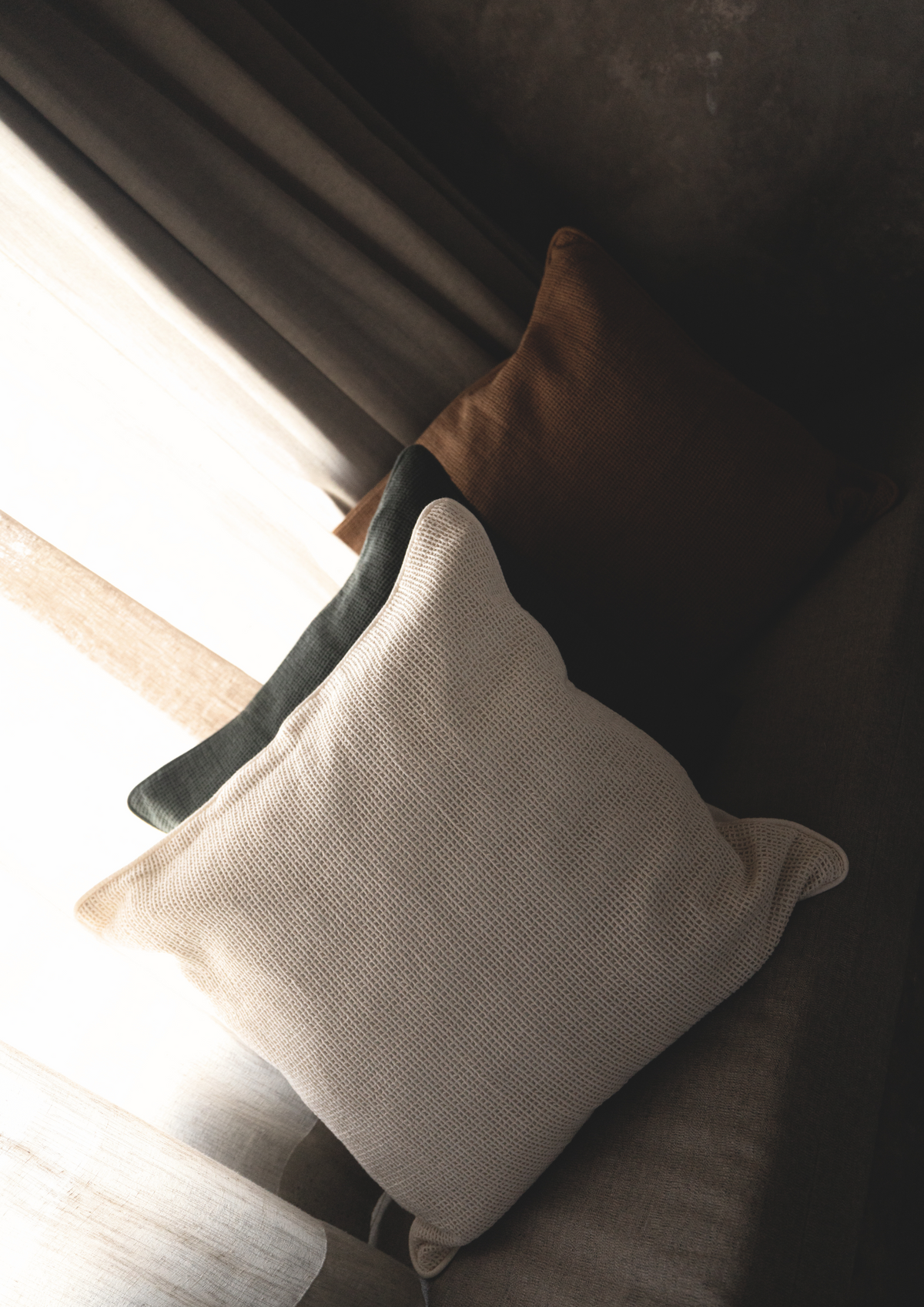
How to build a brunch look around one favorite piece, proportion, layering and enough ease to continue through the rest of the day.
Leer artículo
Caring for artisanal textiles begins with identifying material, construction and finishing. A guide to protecting cushions and home textiles without universal rules.
Caring for an artisanal textile does not begin with a washing method. It begins with identifying what you have. Material, weave, embroidery, fringe, filling and finishing can respond differently to water, friction and storage.
The specific product instructions should always come before general advice.
Caring for artisanal home textiles begins by identifying what actually needs cleaning: a removable cover, a complete cushion or a decorative piece not designed to be taken apart. Materials and techniques vary from product to product, and advice suitable for plain cotton may be inappropriate for raised embroidery or a delicate blend. Reading the label and documenting the object's condition is more useful than imposing one maintenance routine on every textile in the home.
A woven cushion, embroidered piece and smooth textile may require different treatment even if they share the same function. Cover and filling can behave differently. Pieces such as Cojín Origen or Cojín Telar Lineal should follow their specific care instructions.
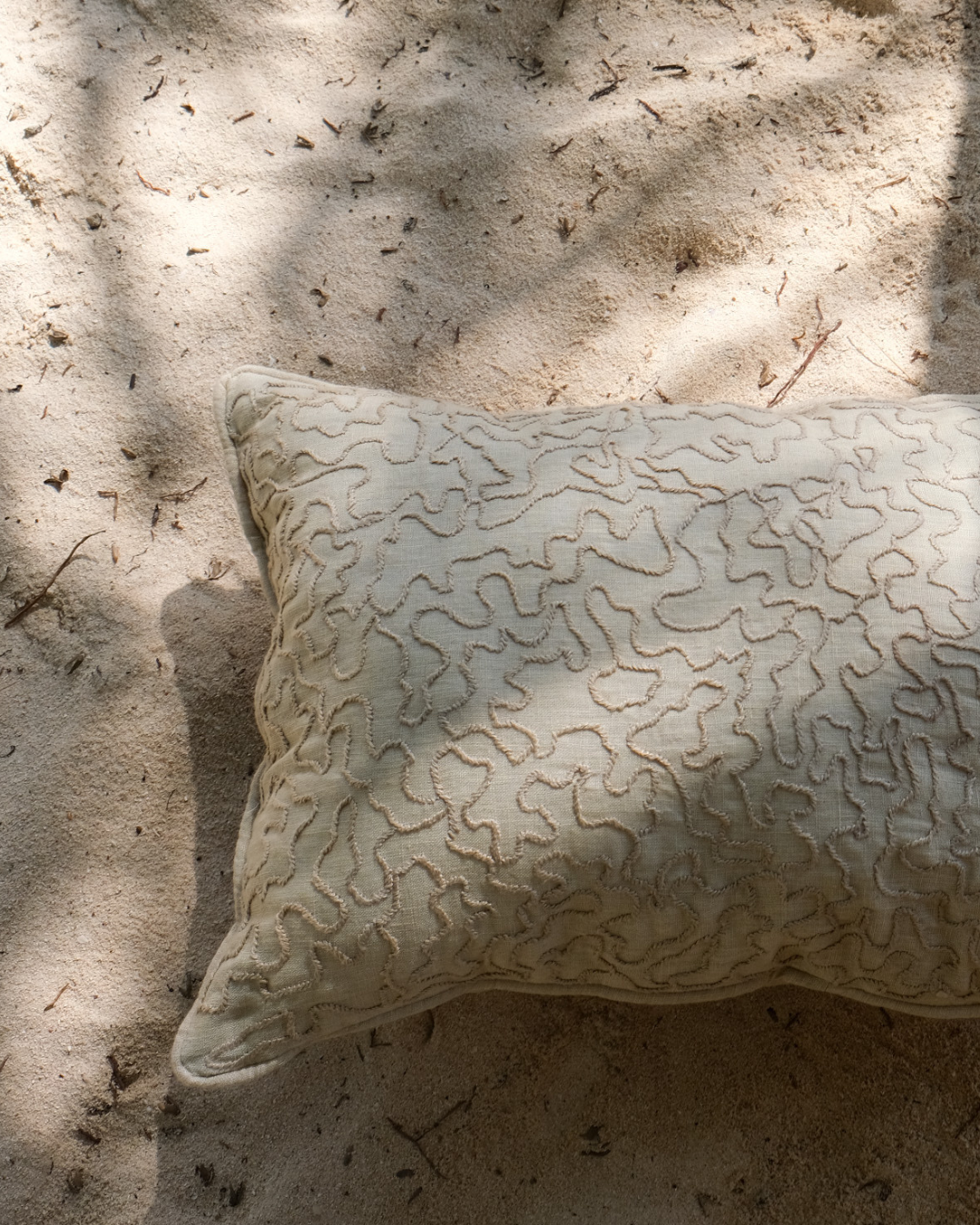
A product may contain hand embroidery, structured weaving or surfaces with different care requirements. The active Origen cushion, documented as cotton with hand embroidery, requires checking its own information before selecting a cleaning method. Appearance does not establish whether a textile can be submerged, rubbed or exposed to heat. When directions are missing, requesting guidance is preferable to testing an aggressive household solution. Before treating a stain, also consider its origin and avoid spreading it through abrasion against raised decorative details.
Texture, fringe and embroidery can snag on zippers, rough surfaces or accessories. Reducing unnecessary friction helps preserve the surface. Prolonged exposure can affect some colors and fibers. Store textiles clean, dry and protected from excessive humidity.
A removable cover is not equivalent to a cushion with an integrated insert. Construction determines which parts can be separated and which should remain together during care. It is also unsafe to assume an insert is included solely from the product photograph; the commercial listing must establish that information. The active Telar Lineal cushion offers an example of a surface documented as backstrap-loom weaving, but it cannot justify washing guidance for unrelated pieces. Precision begins by distinguishing the individual components that make up the object.
Avoid unnecessary compression. Pie de Cama Origen, for example, should have enough space to avoid severe permanent folds. Some manual processes create small differences in weave, color or finishing. When documented, they are part of the piece.
Repeated contact with rough surfaces may wear raised areas of a textile. Light and humidity also affect the environment in which a piece is kept, although specific reactions depend on fibers and finishing. Consider where a cushion rests, whether it experiences constant friction and how daylight changes during the day. The essay on depth through artisanal textiles explains why light reveals different details. Those visual effects should be balanced against practical preservation of the individual object, rather than prioritizing one beautiful moment of illumination.
If the textile combines delicate embroidery, complex construction or a difficult stain, improvising can create more damage. In those cases, professional help may be the safer choice. Read How to Recognize a Quality Artisanal Textile.
There is no universal care routine. There is a more precise reading of each textile.
When storing textiles between seasons, they should be clean and completely dry according to their permitted care. Avoid compressing raised details and place the garment or object where it will not catch against hardware. Before returning it to a sofa or bed, inspect the surface instead of automatically applying an iron or steam: no heat method is universally safe. Objects used in everyday life may need periodic attention, but frequency does not justify aggressive cleaning. Preservation means respecting construction so the textile can continue being used.
Cojín Telar Lineal · Cojín Origen · Pie de Cama Origen
Explore Mexican design textiles for home
Home Décor: Mexican Textile Craft · How to Use Artisanal Textiles to Add Depth
No. Check the construction and care instructions of each piece.
Only when the item's own care instructions allow that treatment.
A.03 / JOURNAL / SELECTION
Pieces that continue this story.
New editions, pieces, places, craft and ways of living.