01
What to Wear to Weekend Brunch Without Looking Overdressed
How to build a brunch look around one favorite piece, proportion, layering and enough ease to continue through the rest of the day.
Leer artículo

Five ways to wear a kimono at the beach as a real layer of the look, not only as a cover-up.
A kimono at the beach can do far more than cover a swimsuit. When it becomes a real layer, it can move from shore to lunch, into interiors, through wind and toward evening. The key is to treat it as clothing, not as a temporary accessory.
At La Troupe, the kimono is one of the most flexible silhouettes: a piece that changes context through base, proportion and styling.
A kimono can work near the sea and remain useful after the beach day ends. However, not every outer layer is a swim cover-up or can be worn wet. The important questions concern its relationship with the dress or trousers beneath it, how the garment responds to movement and what adjustments allow it to be repeated. Choosing through proportion and construction is more useful than copying a photograph taken beside the water.
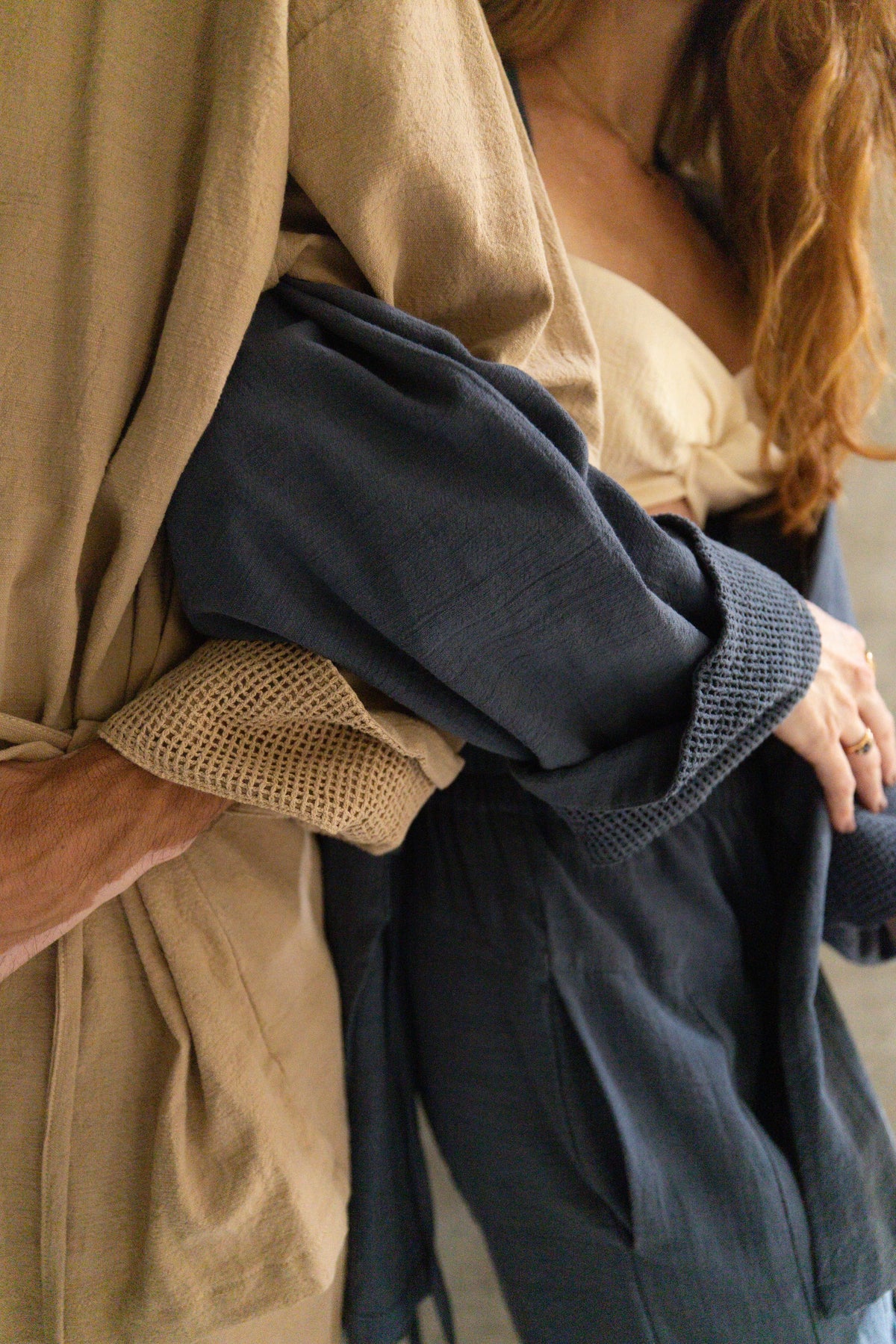
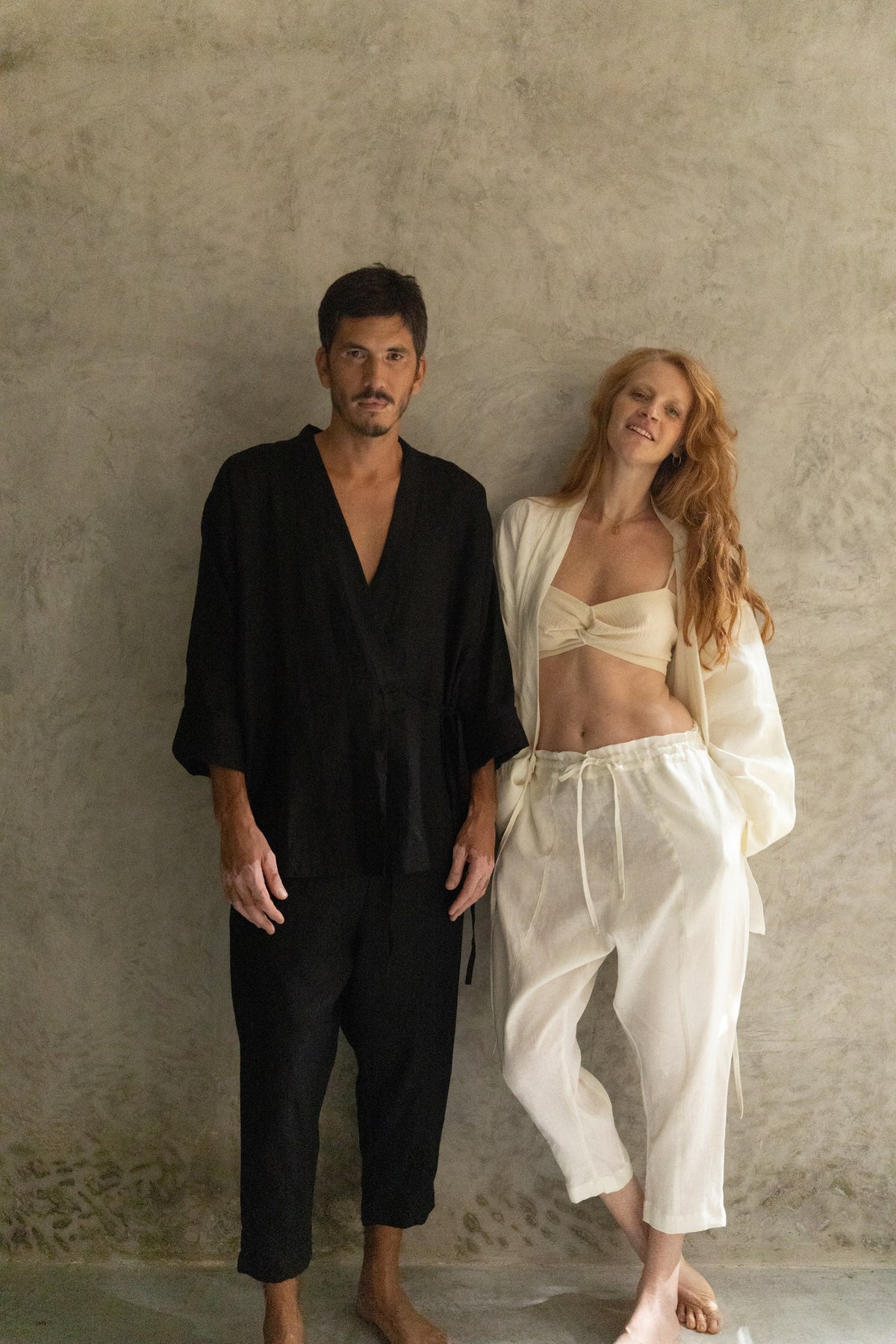
Let the kimono create the vertical line. A simple base—dress, trousers or monochrome set—allows length and movement to lead.
A fluid dress feels different under a long layer. The kimono can extend the same dress into lunch or afternoon without requiring a full change.
An open layer leaves the construction underneath visible. Over a dress, a kimono may follow one continuous line; with trousers and a blouse, the volume moves and asks for another interpretation. The active Trenza kimono is one reference for assessing an open garment, but fit still depends on shoulders, sleeves and length. Walk and sit in the complete outfit to see whether it requires constant adjustments. The base should also look complete when the outer layer is removed. That simple test is more useful than assuming every open garment has an unlimited fit.
Two fluid silhouettes can work together if there is a clear relationship between them. One can be longer, quieter or more contained.
Excess fabric may look expressive in a still photograph and become less comfortable once movement begins. Very wide trousers and a long kimono can compete when both finish at similar points. The aim is not to ban volume but to decide which element establishes the silhouette. When a dress already carries distinctive details, another expressive layer may add little. The guide to how a kimono should fit considers body, proportion and length without prescribing one answer for everyone. A believable combination must work in motion rather than only in front of a mirror.
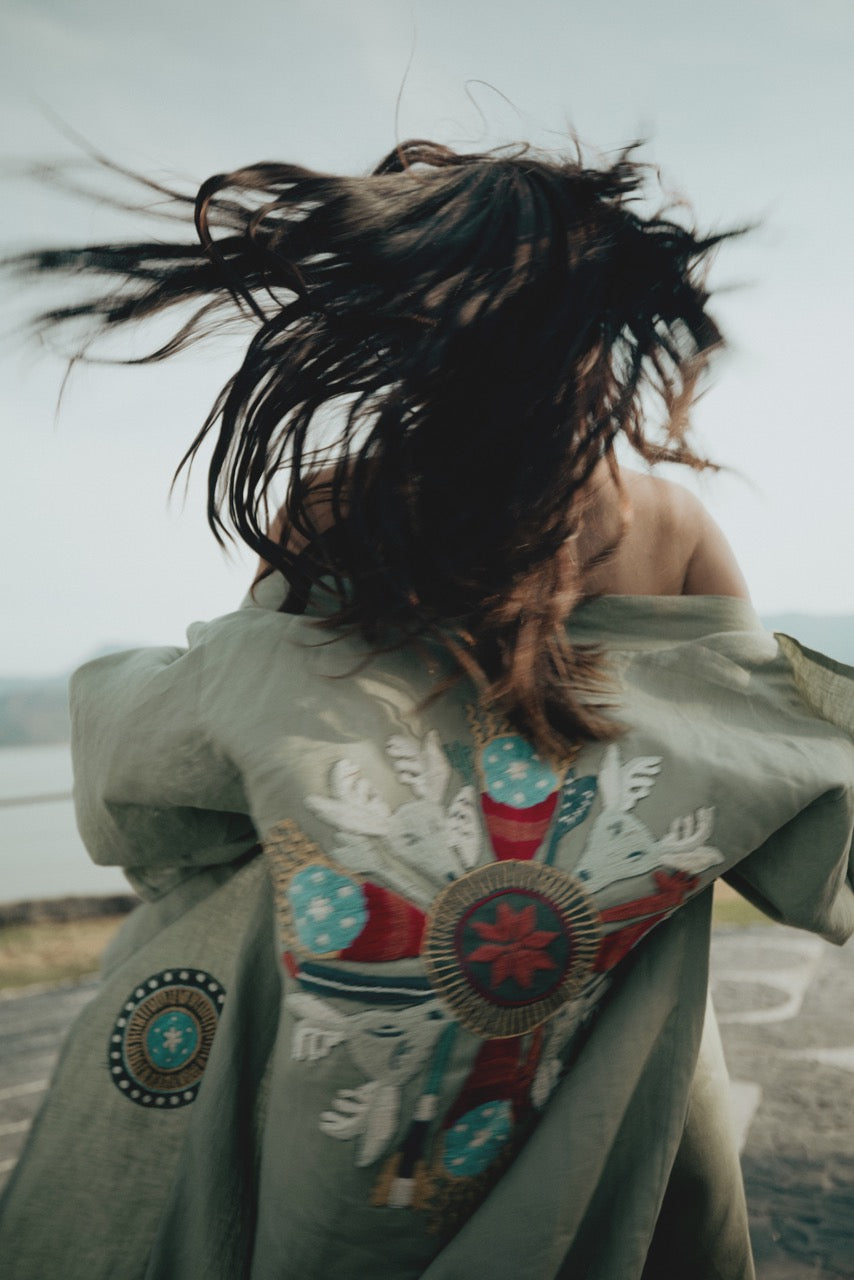
If the layer carries texture, embroidery or color, the rest can become more silent. The kimono stops being a complement and becomes the piece that defines the look.
Kimono Trenza, Kimono Tao and Kimono Alquimia offer different ways to work with that idea.
One of the kimono’s strongest advantages is that it can stay while other variables change. Footwear, accessories or a darker base can move the same look into evening.
Walking near water may bring salt, sand, moisture and wind. A kimono should not be assumed to tolerate those conditions because it appeared in a coastal campaign. Check individual care instructions and distinguish wearing a layer as clothing from placing it directly over wet swimwear. If the hem drags or sleeves interfere with a shoulder bag, the garment loses some usefulness. These practical details deserve as much consideration as color or textile surface when choosing the right piece for a particular person's activities and wardrobe.
Saving a kimono only for the shore reduces its potential. A good layer can live in city, travel and resort. That ability to cross contexts is one reason the silhouette keeps returning inside La Troupe.
Continue with How to Wear a Kimono from City to Sea and How Should a Kimono Fit?.
A kimono works best when it stops being “the beach piece” and becomes part of the real wardrobe.
A kimono may continue into lunch or an urban afternoon when the venue's expectations and the garment's construction allow it. Changing the base or adjusting footwear can offer another interpretation. Removing the outer layer is also reasonable when the dress already completes the ensemble. For the wider transition, read how to wear a kimono between city and sea. Real versatility becomes apparent through repeat use in recognizable situations rather than a limitless list of imagined possibilities.
Kimono Trenza · Kimono Tao · Kimono Alquimia
Explore ways to style a kimono
What to Wear in Tulum from Day to Night · Beachwear vs. Resort Wear
Yes, but it does not need to be limited to that use.
It depends on the base and the movement you want to create.
Yes. Change the base, footwear or level of contrast.
A.03 / JOURNAL / SELECTION
Pieces that continue this story.
New editions, pieces, places, craft and ways of living.