01
What to Wear to Weekend Brunch Without Looking Overdressed
How to build a brunch look around one favorite piece, proportion, layering and enough ease to continue through the rest of the day.
Leer artículo

A practical guide to choosing cushion size by sofa, bed and composition scale using large, square and rectangular formats.
Choosing the right cushion size is less about following a universal formula and more about reading scale. A cushion that is too small can disappear on a large sofa; too many oversized cushions can make the furniture hard to use. The composition works when size, quantity and available space are treated as one decision.
In La Troupe Home Décor, textile enters the room as material and surface. Scale is what lets that materiality be visible without overwhelming the space.
A cushion may appear perfectly proportioned in a photograph and become too large when placed on an actual sofa. Seat width, backrest depth and how the furniture is used determine how many pieces can coexist. A bed raises similar questions, although habits and available space differ. Choosing size means considering the people who will use the room before building a visual arrangement. Square and rectangular formats may introduce rhythm without accumulating objects or making the furniture difficult to use.
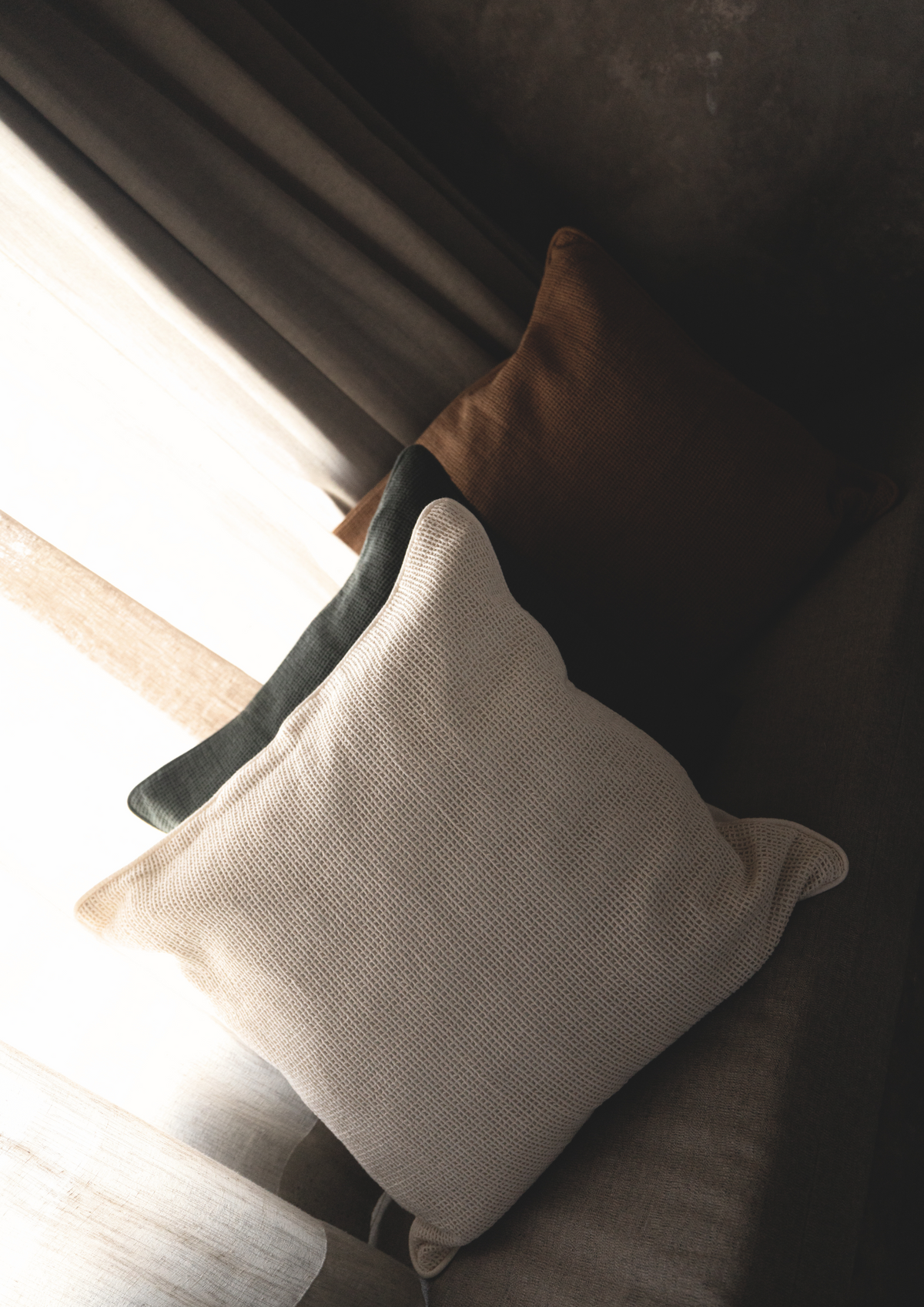
Look at seat width, back height and how much free space you want to preserve. On a large sofa, one or two bigger formats can anchor the composition better than a row of small pieces. Larger square formats work well as the first layer. They offer enough surface for texture, weaving or embroidery to have presence. Cojín Origen can work as that base piece around which other scales are built.
Before purchasing cushions, measure the sofa and notice how much room remains for sitting when pieces occupy the corners. A narrow seat may lose functionality with two large cushions even when the arrangement looks compelling from the doorway. The active Origen cushion, with its documented square format, offers one reference for considering scale. There is no need to cover the entire backrest; open space can help a textile stand out. A suitable composition should allow people to use the furniture without constantly removing too many decorative objects.
Mid-size cushions connect a larger anchor with a smaller accent. They can also introduce another texture without changing the hierarchy too much. A rectangular format breaks the repetition of squares and can work in front. On a bed, it can also close the composition without adding too many layers.
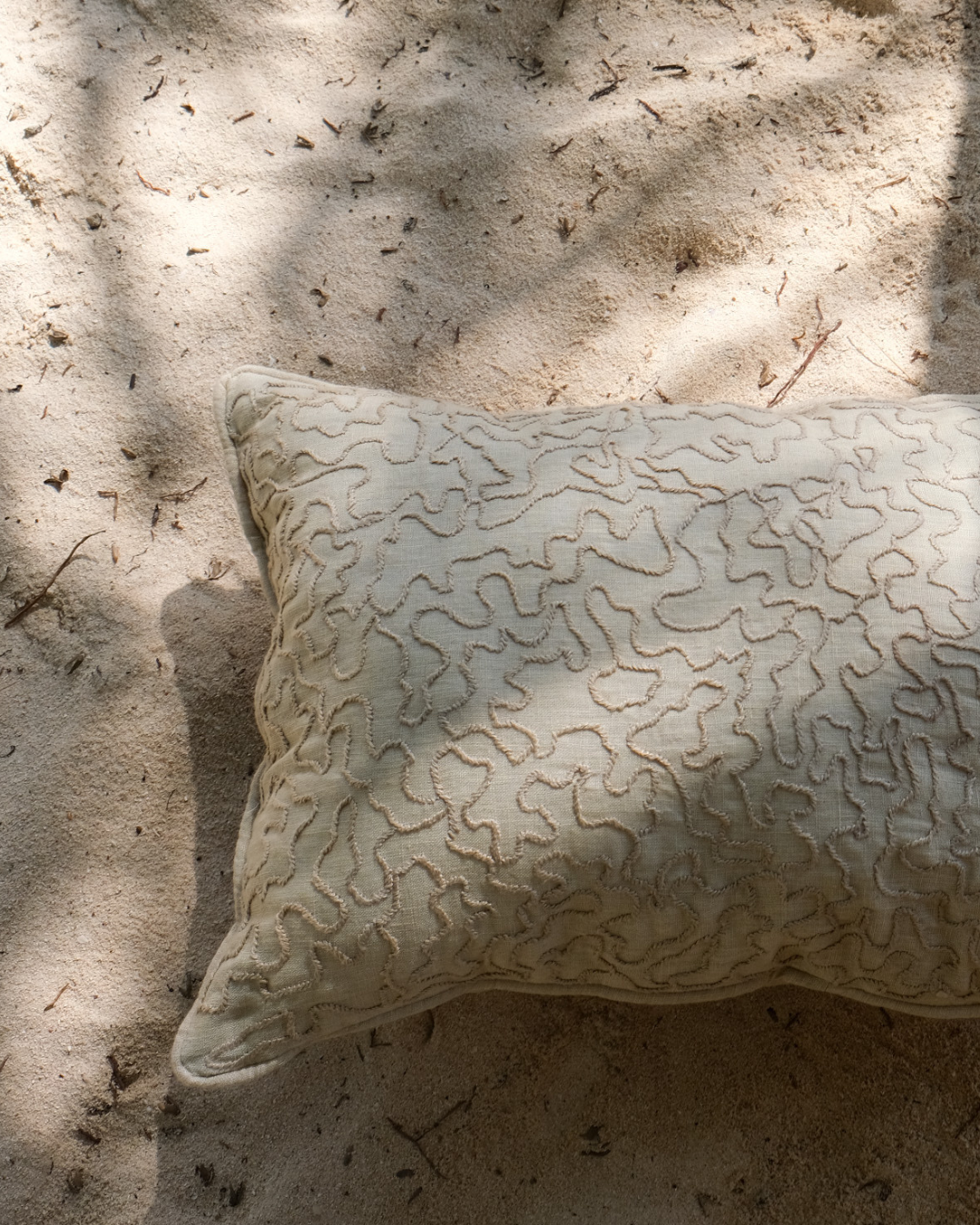
Contrasting formats changes the perception of depth. A square may form the back plane while a rectangle introduces a more contained shape in front. The active Impronta cushion offers a different proportion for imagining that relationship, although current product dimensions should always be checked. There is no universal number of cushions or rule requiring identical pairs. The guide to combining artisanal cushions explores how texture and color work without treating decoration as a closed formula.
A bed can accept more layers than a sofa, but that does not mean accumulation is necessary. A pair of large formats behind, a smaller scale in front and perhaps one rectangular piece can be enough. If you also use a textile such as Pie de Cama Origen, consider how that additional plane changes the visual weight of the cushions. A highly textured piece may need less scale to attract attention. A quieter surface can grow larger without becoming dominant. For mixing, read How to Mix Artisanal Cushions.
On a bed, pillows, the headboard and any textile at the foot change the decision. An arrangement covering much of the surface may become inconvenient when the time comes to rest or tidy the room. The active Origen bed textile is one example of another scale and purpose. When textiles include raised details, folding and storage need attention while they are not being used. The bedroom should retain an inviting atmosphere without turning into a display that is difficult to maintain. Comfort belongs within the visual decision.
The most interesting composition does not always begin with a matching set. Start with one piece that makes sense in the room and build around it. Explore Home Décor
Texture can create as much contrast as color. An embroidered cushion against smooth upholstery may attract attention even in a closely related palette; relief also changes under different lighting. Observe pieces at several hours of the day and decide which will lead the composition. For more on this relationship, read how textiles bring depth to a room. Furniture is well composed when it remains inviting to use. Proportion, texture and open space are parts of the same choice, rather than separate decorative tricks.
The right scale does not fill the space. It organizes it.
Cojín Origen · Cojín Impronta · Pie de Cama Origen
Continue with the related guide
How to Use Artisanal Textiles to Add Depth · Home Décor: Bringing Mexican Textile Craft into the Home
It depends on quantity and proportion. One large piece can organize the sofa better than many small ones.
No. Varying scale creates hierarchy and depth.
There is no fixed number; the composition should respect the bed’s scale and remain functional.
A.03 / JOURNAL / SELECTION
Pieces that continue this story.
New editions, pieces, places, craft and ways of living.