01
What to Wear to Weekend Brunch Without Looking Overdressed
How to build a brunch look around one favorite piece, proportion, layering and enough ease to continue through the rest of the day.
Leer artículo

How to use texture, scale and contrast to introduce artisanal textiles into contemporary interiors without overwhelming the room.
An artisanal textile can change the perception of a room without taking up much physical volume. It does so through texture, scale and contrast. Weave, embroidery and visible fiber introduce depth because they interrupt the uniformity of smoother materials.
The key is not to confuse depth with accumulation. More textiles do not always create a richer room.
An interior can feel flat even when it contains several colors. Sometimes what is missing is a difference in surfaces: something woven against smooth upholstery, quiet relief near a plain plane or an object whose texture shifts with the light. Artisanal textiles offer ways to establish that depth, but their effect depends on proportion and the open space around them. Before adding another cushion or bed textile, decide which visual relationship the room actually needs.
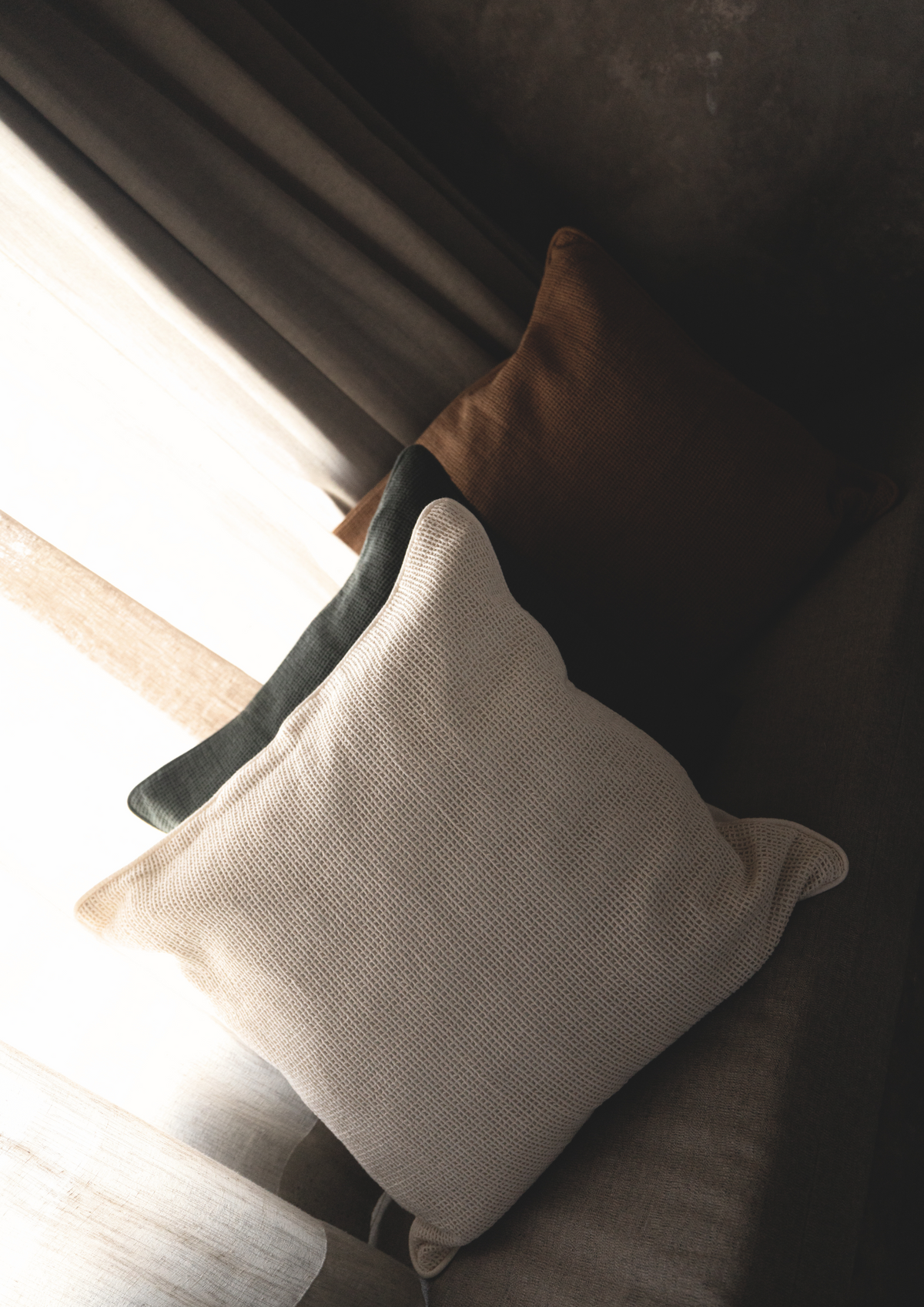
Against wood, stone, concrete or smooth walls, a textile adds another visual speed. The eye pauses because the surface has weave, relief or irregularity. A small detailed cushion can have as much impact as a larger, quieter piece. Texture and size should be chosen together. Cojín Origen can act as an anchor while another format supports it.
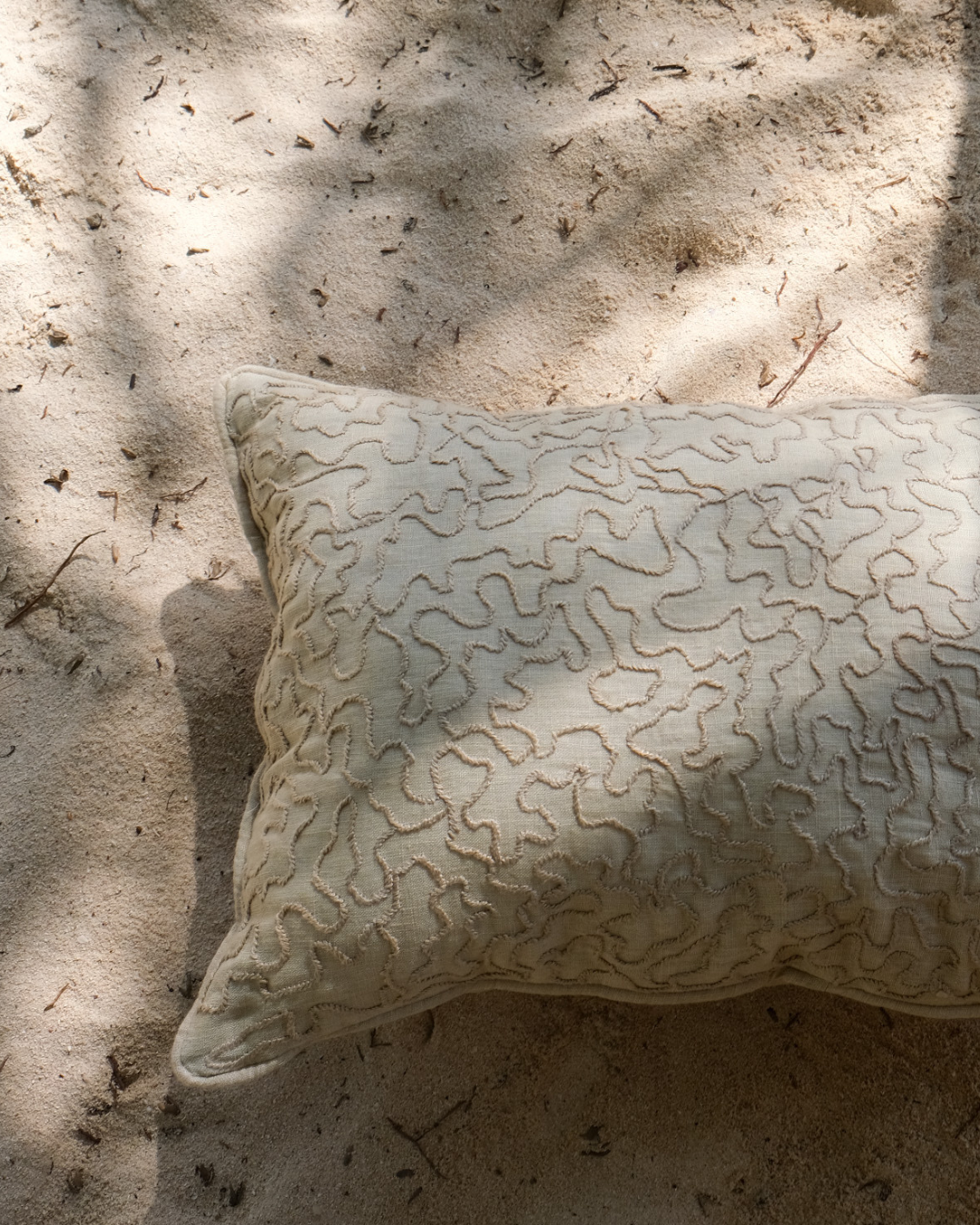
A textile may catch the eye through its relief even when its color is close to the furniture beneath it. This offers an alternative to indiscriminately adding patterns. The active Origen cushion, documented as cotton with hand embroidery, shows how a worked surface can become a distinct plane on a sofa. Product information matters: two cushions in similar tones may behave differently and require different care. Depth is easier to perceive when texture is accompanied by a quieter surface. Contrast need not be dramatic to make a room feel more considered.
A room can gain layers inside a restrained palette. Fiber, sheen, weave and density may create enough contrast. When using several textiles, repeat a tonal family, geometry or type of edge. They do not need to match; they need a relationship. Cojín Impronta can support another piece when there is a shared visual element.
Size governs how much presence each object has. A large cushion may dominate a small chair, while a rectangular piece can organize a composition in layers. Measure against the actual furniture rather than assuming scale from the size of an image. The Impronta cushion offers a different format from the square Origen and helps illustrate that choice. When every object has a similar scale, changing relief or orientation may provide variety without another competing pattern. The room's function should remain the frame within which decoration is arranged.
Cushions work vertically; Pie de Cama Origen introduces a broader horizontal plane and can connect the bed to the rest of the room. If a textile carries enough detail, avoid surrounding it with objects of equal intensity. Empty space is part of the composition.
Side lighting reveals raised threads, small shadows and changes in surface that may disappear under frontal light. Observe a textile near a window at different hours before deciding where it belongs. Color changes with light too, although a composition should not depend entirely on an effect seen only once. A textile at the end of a bed may add another plane in a bedroom, but it should relate to the bed's measurements and allow ordinary use. The guide to combining artisanal cushions explains the differences between contrast, repetition and visual overload.
Texture changes through the day. A woven surface may appear almost flat in frontal light and much deeper in side light. Observe the textile before adding another object. Read How to Mix Artisanal Cushions and How to Choose the Right Cushion Size.
The depth of a room does not come from filling it. It comes from relationships between surfaces.
When an object is placed only to be admired, it may become an obstacle. Visual depth should not prevent people from sitting down or using a bed comfortably. Leave space between expressive pieces and consider whether the composition still works after items are moved for cleaning or everyday activities. The Home Décor collection offers textiles to explore through form and finish. A contemporary living room is not defined by the number of objects it contains, but by recognizing which elements deserve prominence and which provide the visual background that makes them legible.
Cojín Origen · Cojín Impronta · Pie de Cama Origen
Browse cushions for a contemporary living room
Home Décor: Mexican Textile Craft · How to Care for Artisanal Textiles at Home
No. Relief, scale and contrast with smooth surfaces can provide depth.
Not always. Separating expressive pieces may make each one easier to appreciate.
A.03 / JOURNAL / SELECTION
Pieces that continue this story.
New editions, pieces, places, craft and ways of living.