01
What to Wear to Weekend Brunch Without Looking Overdressed
How to build a brunch look around one favorite piece, proportion, layering and enough ease to continue through the rest of the day.
Leer artículo

A practical guide to mixing artisanal cushions through scale, texture, color and repetition without overwhelming the room.
Mixing artisanal cushions is not about finding pieces that perfectly “match.” The goal is to build a composition where scale, texture and color have a clear relationship. When everything matches too closely, the room can lose character; when everything competes, the eye has nowhere to rest.
Home Décor works best when each piece has a role: one anchors the composition, another introduces contrast and another adds rhythm.
Combining artisanal cushions becomes easier when the starting point is the furniture rather than a shopping list of colors. A sofa used every day needs space for people to sit; a bed may accommodate another arrangement and additional layers. Choosing between a square and rectangular cushion changes the proportions even before embroidery enters the picture. The aim is to create a composition with one point of attention, enough breathing room and genuine comfort when the room returns to ordinary use.
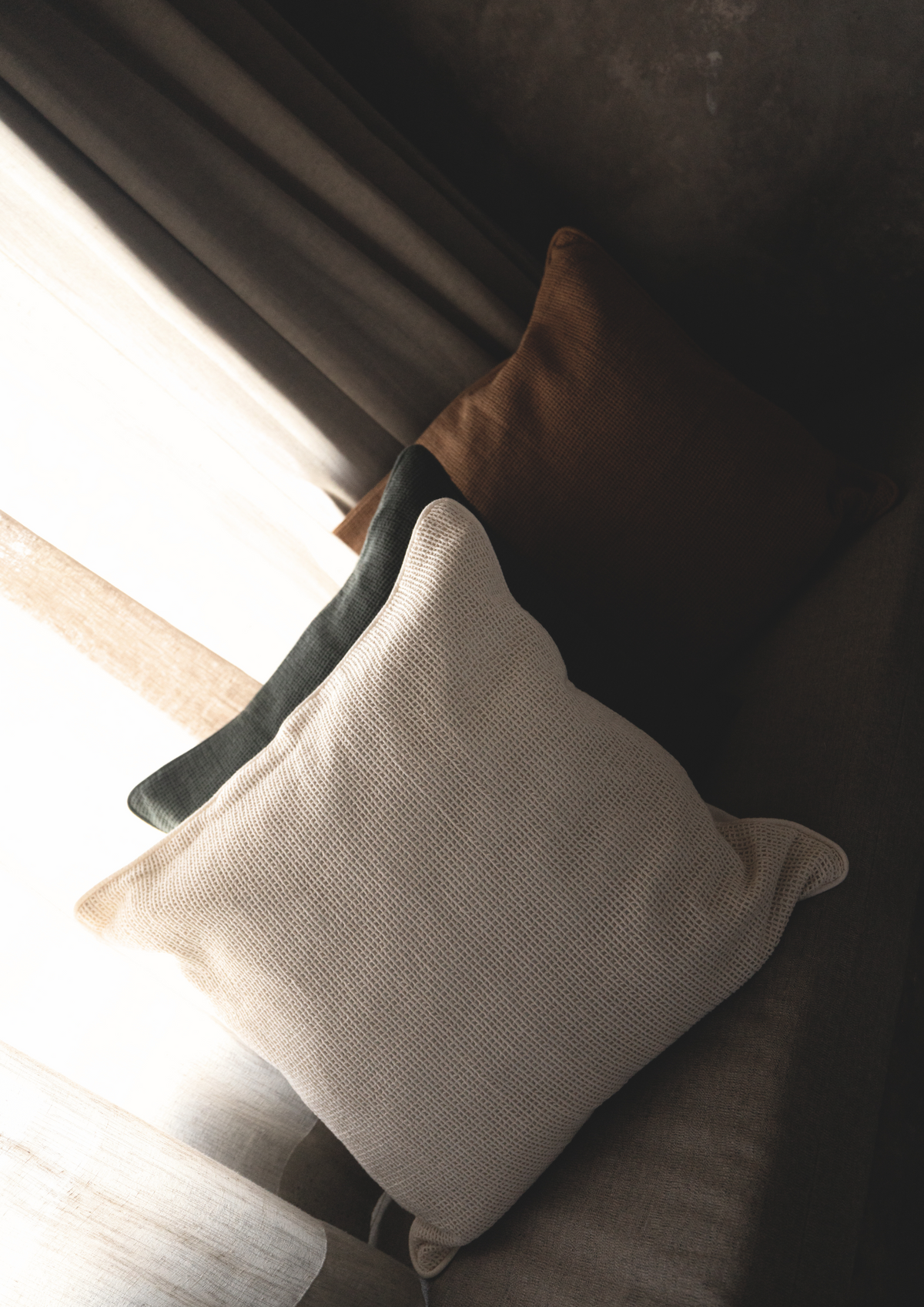
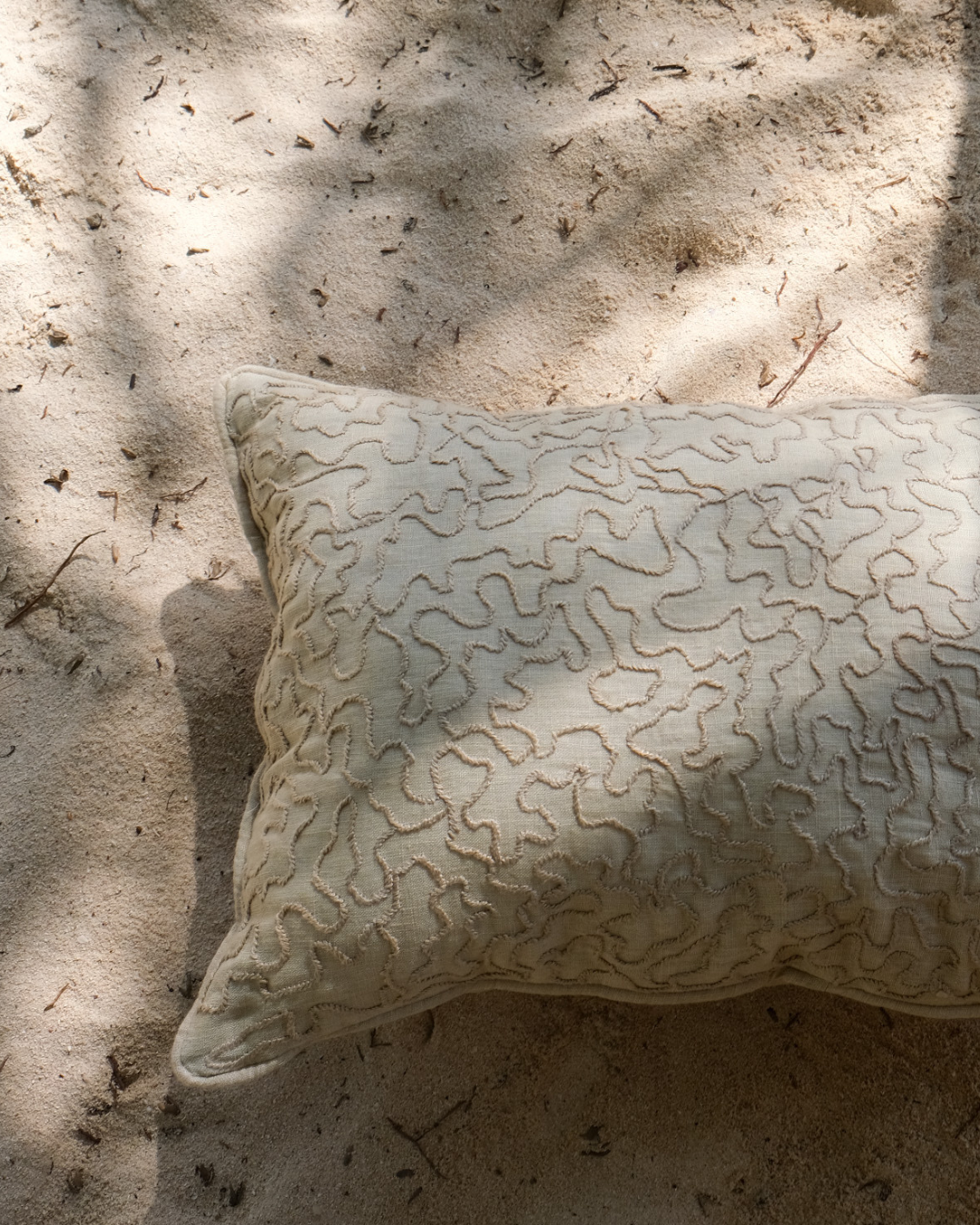
Choosing a cushion with enough presence helps organize the rest. That presence can come from size, texture, color or detail. Cojín Origen can act as the visual anchor and define the scale of the pieces that come after it. Instead of adding another equally intense piece, introduce a controlled difference: another texture, a related color or a smaller scale. Cojín Impronta can work as a counterpoint when it shares one visual element with the main piece.
Before deciding how many cushions are needed, notice how many people normally sit down and which parts of the backrest are in use. A deep sofa may accommodate a different arrangement from a small seat, even when both look similar in a frontal photograph. The active Origen cushion is listed as a 60 × 60 cm square; that measurement provides a more reliable sense of its presence. A compelling combination should allow people to remove and reposition pieces without turning every visit to the sofa into a complicated routine.
A composition often feels flat when every cushion has the same format. Two or three scales create hierarchy. For more on proportion, read How to Choose the Right Cushion Size for a Sofa or Bed. You do not need many graphic motifs to create interest. Visible weave, embroidery or relief can bring enough variation even inside a restrained palette.
Changing sizes creates a foreground and a quieter second plane. A rectangular cushion in front of a square one can break the rigidity of an identical row without requiring another pattern. The Impronta cushion, measuring 35 × 50 cm, offers a different scale against larger pieces. Not every composition requires both shapes, however: the furniture's proportions and the individual designs determine what works. For more precise guidance, read choosing cushion sizes for a sofa or bed before relying on a decorative photograph.
Two pieces do not need to share the exact same shade. A tonal family or repeated contrast can create enough cohesion. When a cushion has strong embroidery or texture, leave a quieter surface around it. Empty space is part of the design.
Colors need not match exactly to establish continuity. They can appear in related tones, or remain secondary when textile texture provides the variation. A piece with a strong motif may benefit from a quieter companion, but there is no universal ban on combining patterns. Consider the scale of the drawing: two large motifs competing at the same height communicate something different from a large motif accompanied by a smaller detail. Judgment matters more than a mandatory three-color formula or a ready-made set. The person using the room should still recognize their own preferences in the result.
A sofa or bed is not a display case. Cushions should move, be used and be removed without making the room feel fragile. A composition is finished when every piece has a role. If removing one cushion makes the room clearer, there was probably one too many.
A strong composition does not show how many pieces you own. It shows how well they relate to one another.
The final decision is knowing when to stop. If the arrangement hides the backrest, prevents use of the sofa's favorite corner or requires moving too many objects, it may be working better as a photograph than as a living space. Observe the composition from the entrance and up close, in morning and afternoon light. Keep only the pieces that add a useful relationship of texture or scale. The guide to depth through artisanal textiles explains why empty space between objects is also part of the design.
Cojín Origen · Cojín Impronta · Cojín Vida Huichol Manta
Explore combinations of decorative cushions
How to Use Artisanal Textiles to Add Depth · How to Care for Artisanal Textiles at Home
There is no universal number; seating dimensions and everyday comfort determine the arrangement.
Yes, when the difference in scale creates depth without making the furniture uncomfortable.
A.03 / JOURNAL / SELECTION
Pieces that continue this story.
New editions, pieces, places, craft and ways of living.