01
What to Wear to Weekend Brunch Without Looking Overdressed
How to build a brunch look around one favorite piece, proportion, layering and enough ease to continue through the rest of the day.
Leer artículo
A shared wardrobe works when garments adapt across bodies through proportion, volume and styling, not just by label.
A shared wardrobe does not work because two people buy the same size. It works when certain garments have enough freedom in proportion, volume and adjustment to move between bodies without losing intention. That changes the way we think about Unisex.
At La Troupe, sharing does not mean neutralizing a garment. It means allowing a silhouette to keep its personality while adapting to different ways of wearing it.
A shared wardrobe works when two people find useful ways to wear the same piece without expecting identical fit. Unisex describes a design approach, not universal sizing. Sharing requires attention to shoulders, length, waist and volume, while accepting that proportions change between bodies. The goal is to add useful options to ordinary clothing rather than buying identical outfits or allowing a label to replace actual measurements. Each person should retain their own style and comfortable movement.
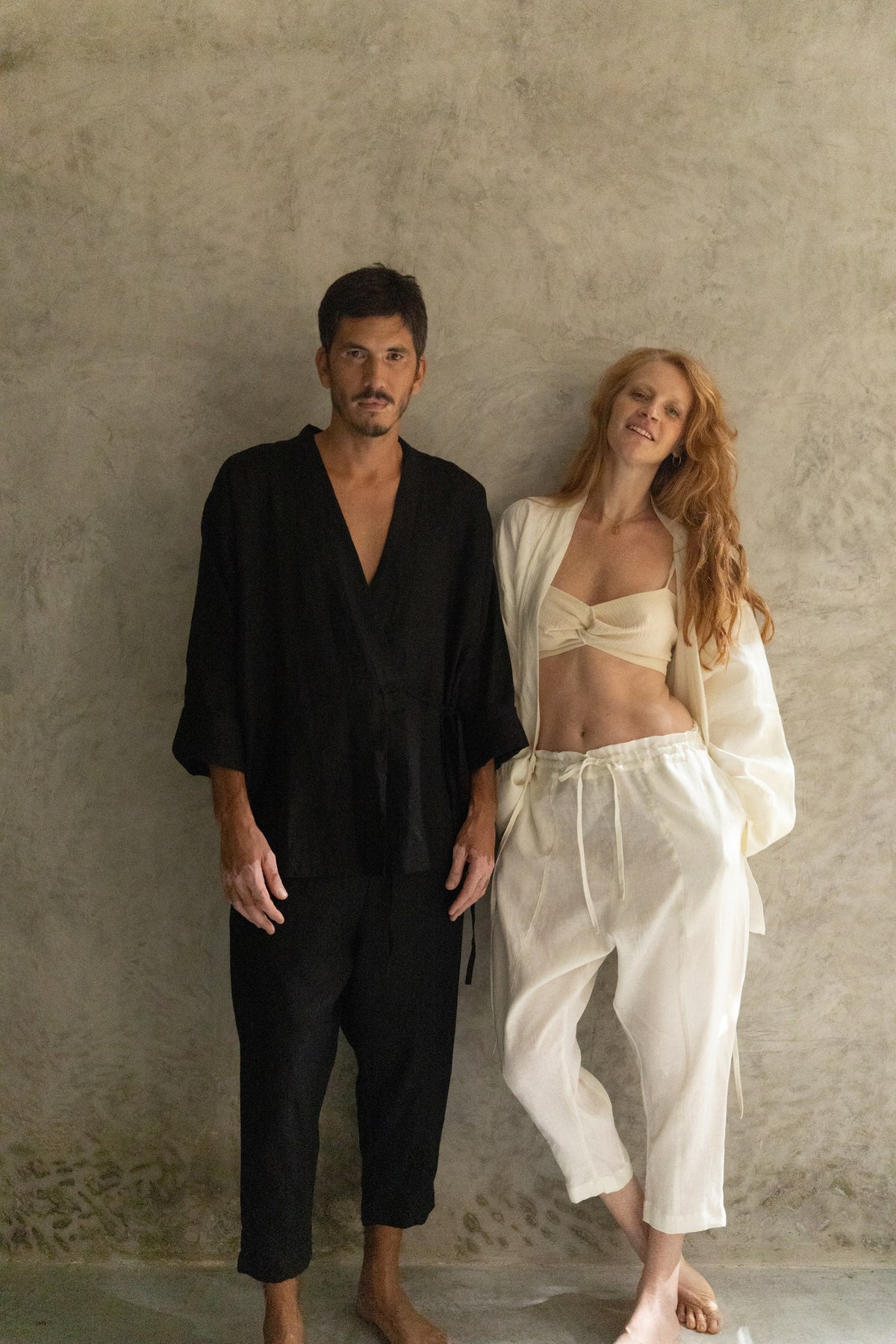
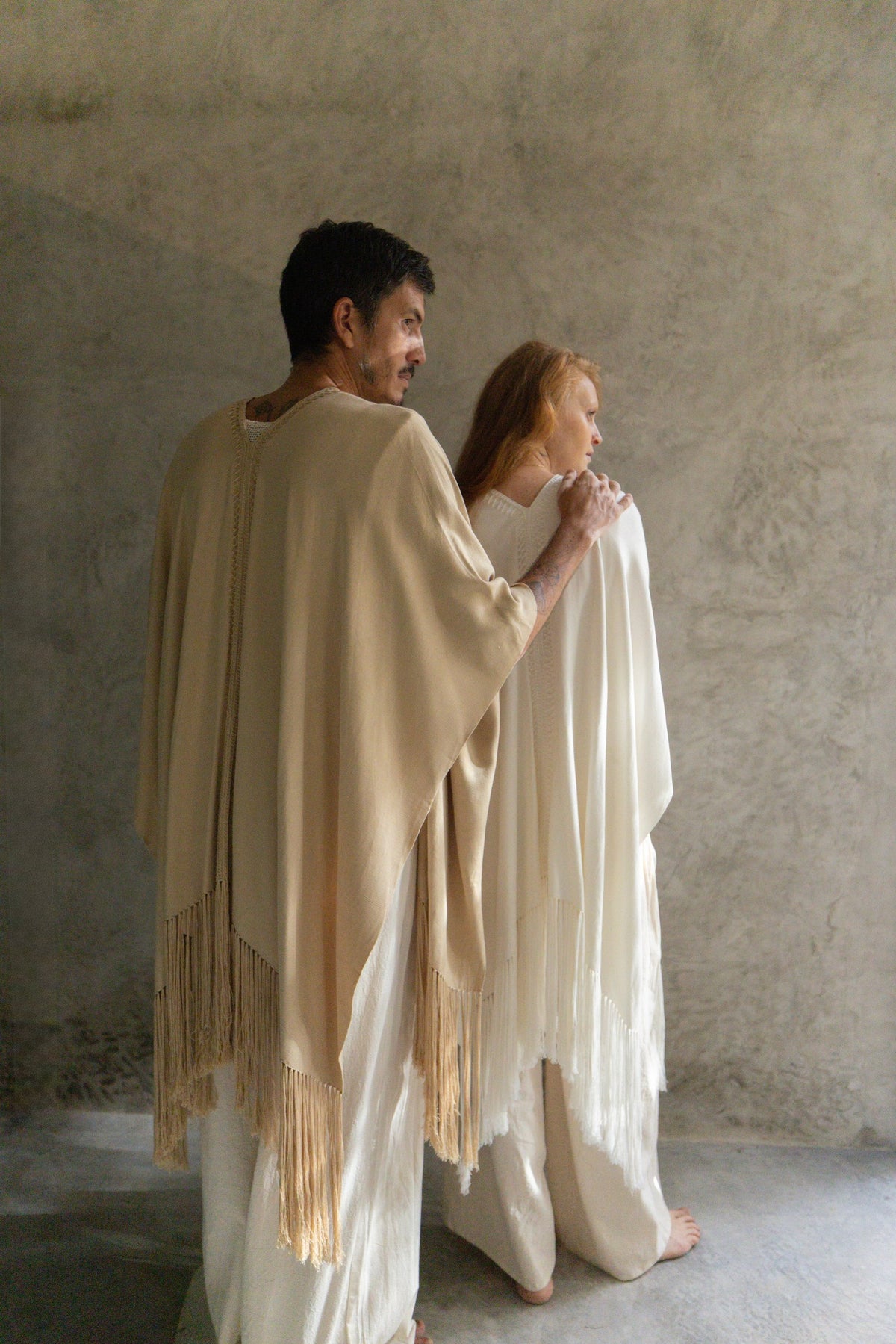
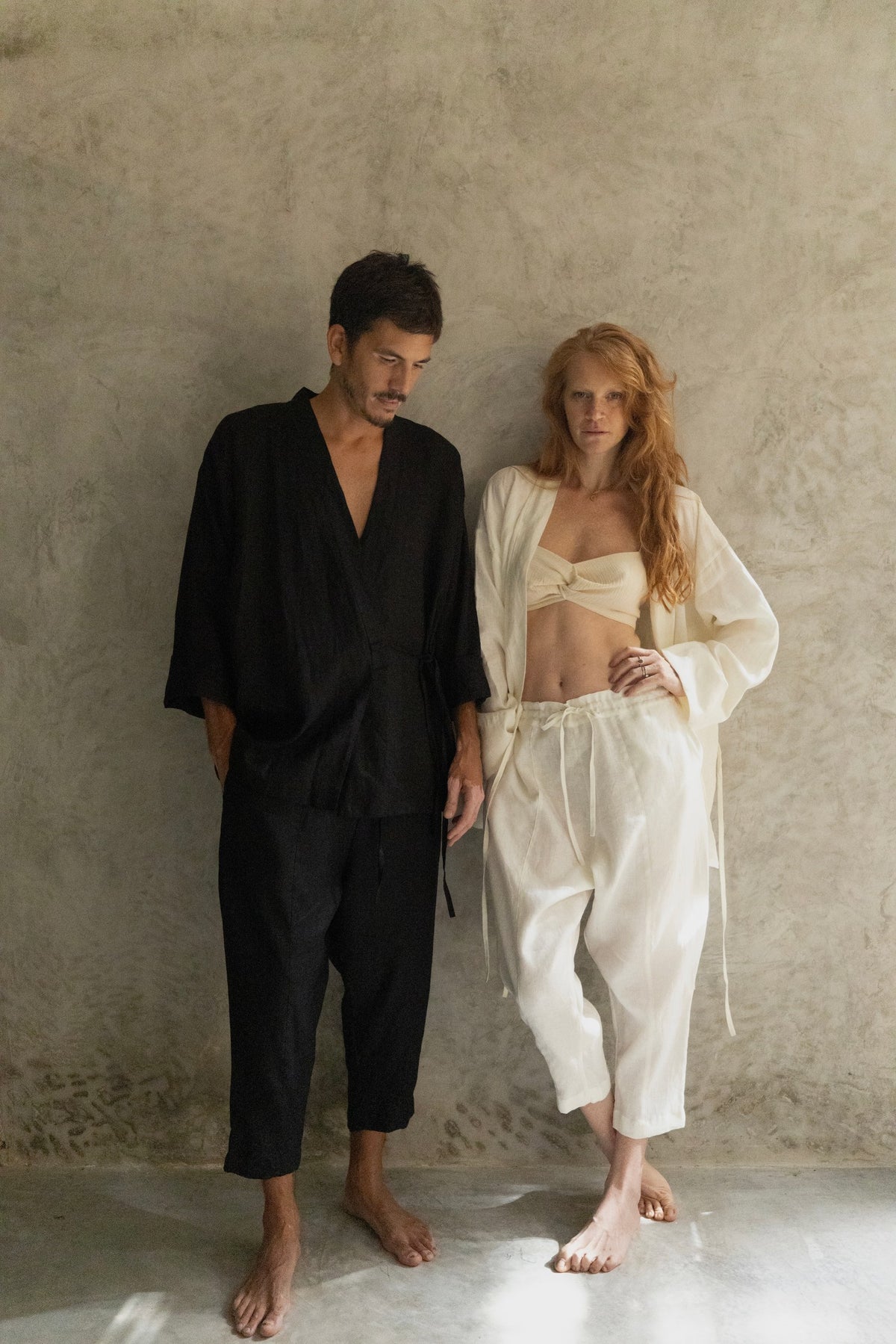
A garment can be called unisex and still depend on one body proportion. Look at front opening, waist flexibility, shoulder placement and how essential length is to the fit. Kimonos, ruanas, relaxed shirts and some wide trousers are often useful because they rely on drape and adjustment rather than extreme shaping. A ruana may look longer and more enveloping on one person and shorter or more graphic on another. A kimono can act as a light outer layer for one person and a stronger editorial layer for another. That variation is part of the point.
Sharing garments may be useful when each person retains their own way of dressing. The same item changes when worn over a dress or with a shirt and trousers, but combinations need to remain comfortable while walking and sitting. Before buying, observe the clothing the prospective wearers already own. If both need several additional purchases to make the new garment work, a shared wardrobe may offer little practical value. The freedom of Unisex design lies in permitting different interpretations rather than requiring two people to look identical.
A one-size garment can make sharing easier, but length and volume still change by body. Ruana Cadena is documented as a one-size unisex piece, yet its proportion naturally shifts from person to person.
Wide trousers still have a waist, rise and length, and these dimensions change how they fit different bodies. The active Hermès trousers provide one reference for comparing actual measurements rather than relying on the Unisex label. If two people need very different waists, this may not be the most practical item to share. The Unisex collection brings together designs that can be interpreted differently, but individual listings remain essential for understanding fit, materials and care. Proportions matter as much as the editorial intention behind a category.
Trousers need more precision because waist and rise matter. Pantalón Hermès can work across bodies, but measurements still matter. One person may wear Kimono Tao open over a shirt; another may use it inside a monochrome look. The garment stays; the language changes.
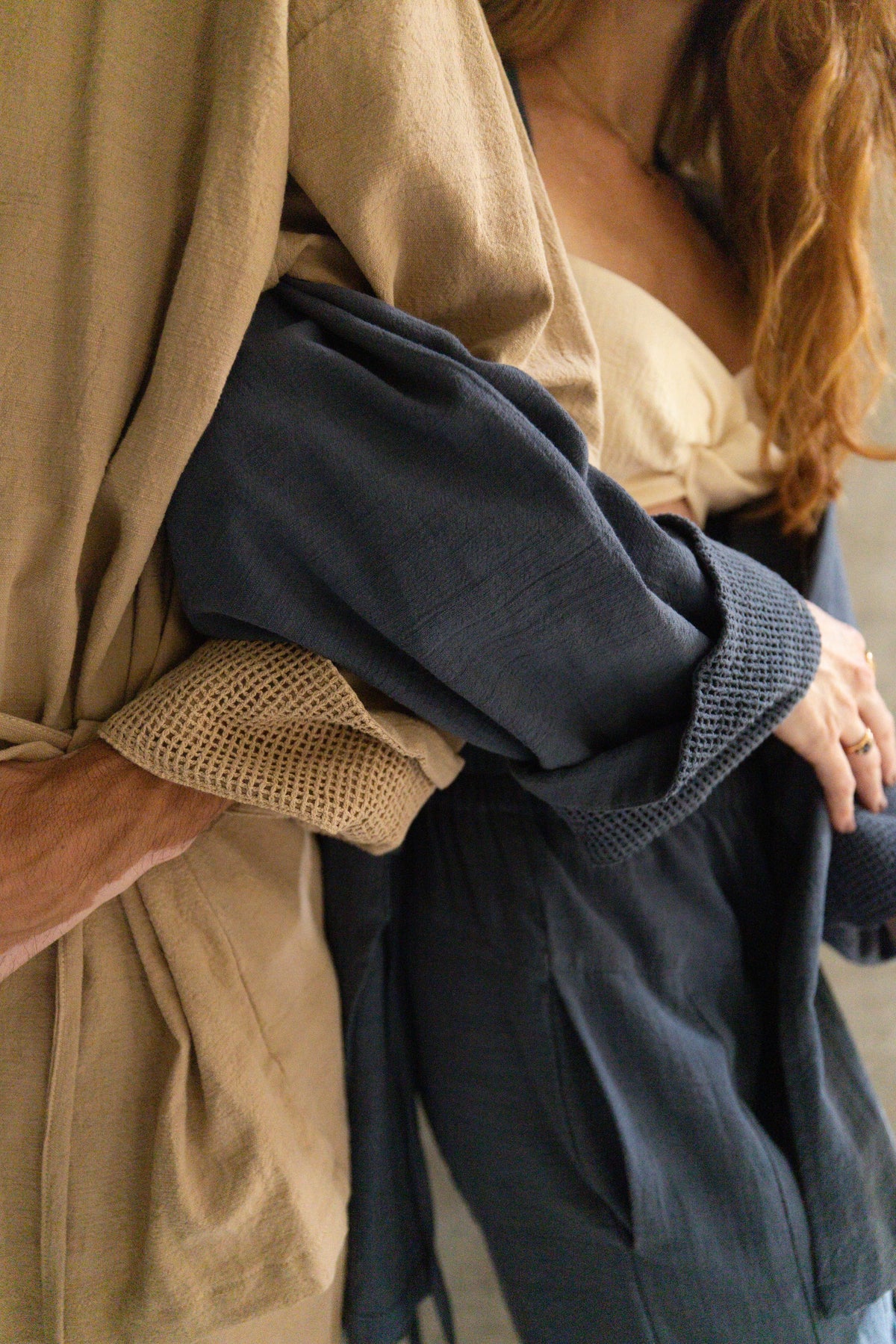
Open ruanas and kimonos may allow other combinations because the base remains visible, but that does not create universal fit. Length, width and sleeves must work for each person. The active Cadena ruana is a reference for examining a particular layer through its own listing. Over a dress it may create one silhouette and over trousers another. The guide to sizing fluid and Unisex clothing explains why sharing designs still requires measuring and testing instead of merely trusting in generous volume. Each wearer should retain freedom of movement and individual style.
Start with three or four categories: an open layer, a shirt, a ruana and an adaptable trouser. Then each person can add individual pieces. Read Unisex at La Troupe and How to Choose Size in Fluid and Unisex Clothing.
Sharing a garment does not erase differences. It designs enough freedom for each body to make the piece its own.
A shared wardrobe needs no ideal number of garments. It may begin with one layer that both people genuinely use and expand only when another practical need appears. Consider frequency of wear, care and storage before buying. Something that remains in a closet does not become efficient merely because two people could theoretically wear it. Value emerges through repeat use and the different combinations that can be made with clothing already owned. The result should be recognizable for each wearer instead of becoming a uniform created for the sake of sharing.
Pantalón Hermès · Kimono Tao · Ruana Cadena
Explore Unisex clothing and gift ideas
What Makes a Garment Truly Unisex? · How to Buy Fluid Clothing Online
No. Each wearer needs to check dimensions.
No. Each garment can have different combinations and proportions.
A.03 / JOURNAL / SELECTION
Pieces that continue this story.
New editions, pieces, places, craft and ways of living.