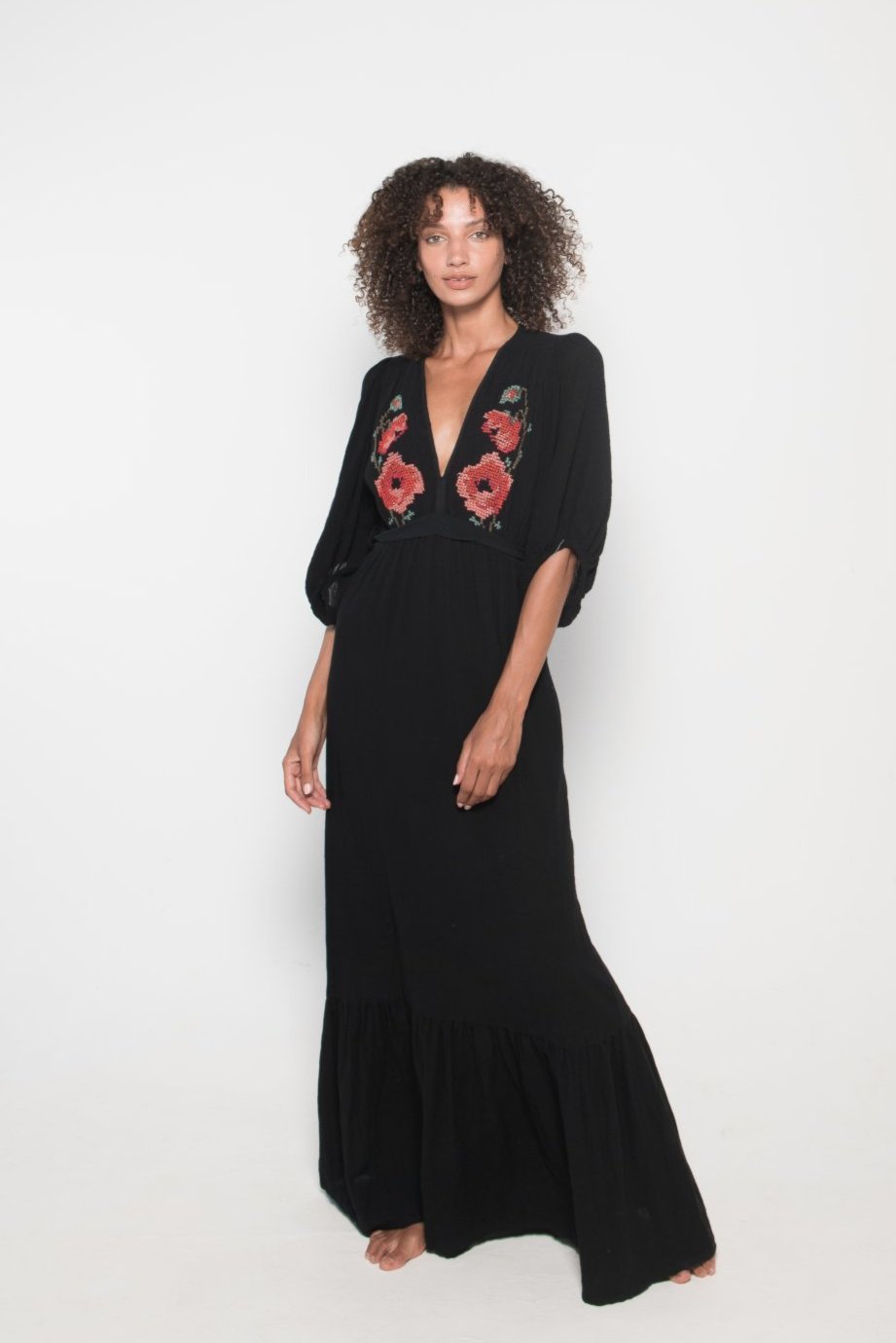
01
What to Wear to Weekend Brunch Without Looking Overdressed
How to build a brunch look around one favorite piece, proportion, layering and enough ease to continue through the rest of the day.
Leer artículo
Layering in warm weather is about open silhouettes, length and light materials rather than simply adding more volume.
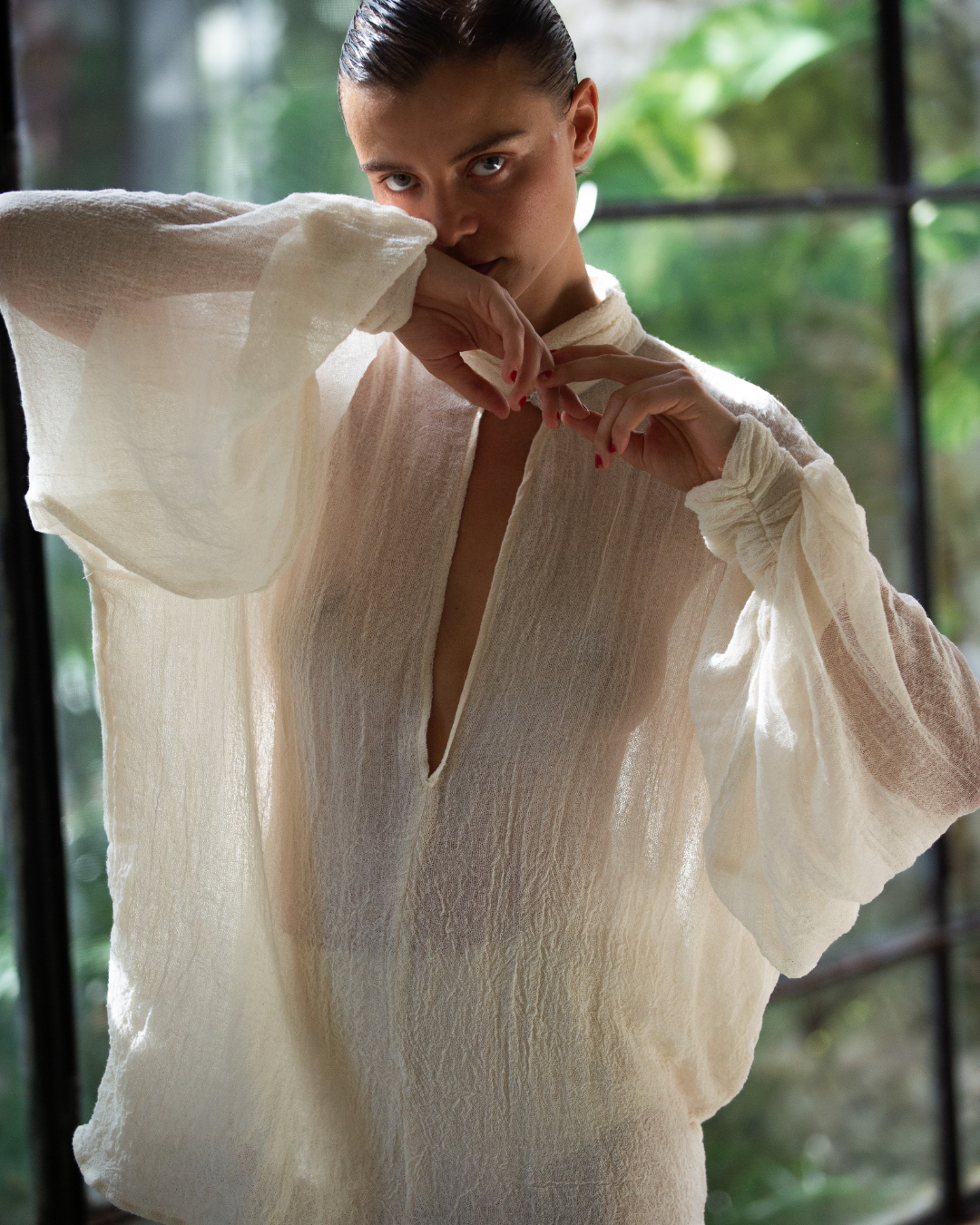
Layering in warm weather does not mean accumulating garments. The right strategy works with openness, differences in length and materials that can move. A useful layer should enter and leave the look easily, respond to interiors, wind or evening and still add something to the silhouette.
At La Troupe, kimonos and ruanas make that possible without turning layering into a heavy seasonal gesture.
Layering in warm weather may sound contradictory until the entire day is considered. Outdoor heat can coexist with cold interiors or a change in evening wind. The solution is not to wear many garments at once, but to build a complete base and add something that can be put on or removed easily. Each layer should provide a real function while preserving movement and remaining consistent with the wearer's personal style. The relationship between garments matters more than their number.
The base matters because at some point it will probably be exposed. It can be a dress, shirt, top or trouser set. If it only works while covered, the capsule loses flexibility.
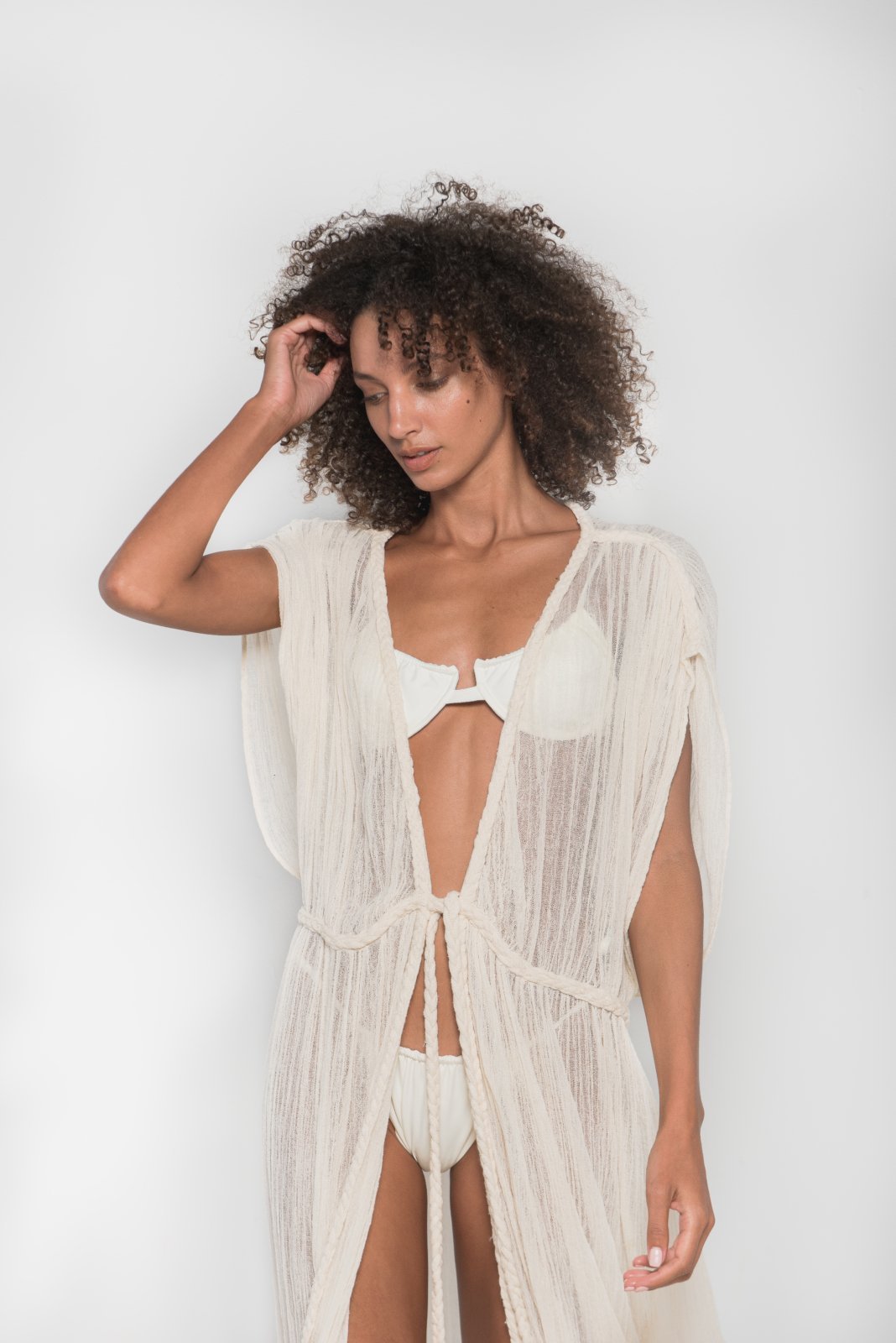
In warm weather, open pieces have an advantage: they add length and movement without enclosing the silhouette.
Kimono Trenza and Kimono Tao show how drape and proportion can change a look without adding much weight.
Start by deciding what can be worn after every extra layer is removed. It may be a dress, a blouse with trousers or a tunic whose construction works independently. If the base only appears complete under another garment, changing temperature can leave the outfit unresolved. Construction matters as much as appearance: check necklines, lengths and proportions while moving. Often that exercise reveals that fewer pieces are needed than expected when packing. A clear base makes it easier to respond to a cold interior or an outdoor breeze without rebuilding the entire outfit around a new combination.
When every garment ends at the same point, the look can feel heavy even when the fabrics are light. A longer layer over a shorter base creates hierarchy.
Wide trousers can coexist with a fluid layer. The key is avoiding identical visual weight. One piece can be cleaner, longer or quieter.
The length of a kimono in relation to the garment underneath changes the result. Two very long pieces may create an interesting silhouette, yet also become inconvenient when their volumes compete during walking or sitting. The active Trenza kimono offers one example of an open layer to consider, without assuming it is lightweight by definition. An outfit with one expressive texture can benefit from quieter accompanying garments. The guide to wearing fluid clothing every day explains how these ideas can also work outside a holiday setting.
A piece such as Ruana Eden can feel more enveloping than a kimono and add another kind of texture.
A stronger layer can move the same foundation into dinner. The change may come from texture, color, footwear or simply how the piece is worn.
This principle connects with What to Wear at a Beach Resort: do not build a wardrobe by hour; build one that can transform.
A ruana relates to the body differently from a kimono, and the categories should not be treated as exact synonyms. An enveloping ruana may provide a useful layer, but its folded dimensions and wearing position have practical consequences. The active Eden ruana needs evaluation through actual sizing and care. An open garment may allow the base underneath to remain visible. Choose according to movement and anticipated activities rather than assuming that one category is inherently more sophisticated than another. Details of the garment matter more than the category name.
Too many layers at the same length, too many competing textures and pieces that are difficult to remove or carry.
The best layer does not add weight to the look. It adds another possibility.
As evening approaches, consider whether the layer helps with wind or a cooler interior and whether it can be carried comfortably afterward. A garment that becomes burdensome when not being worn may offer less practical value than expected. Sometimes keeping a base that already handles several situations is the better choice. Comfort cannot be inferred from promotional images alone; fabric, construction and the wearer all contribute. Before buying, check availability and care instructions. A useful layer should create possibilities without introducing another set of obligations for the person who has to wear it.
Kimono Trenza · Kimono Tao · Ruana Eden
How to Wear Fluid Clothing Every Day · Beachwear vs. Resort Wear
Choose open, light pieces that are easy to remove and work with different lengths.
It can work for evening, wind, travel or interiors depending on material and construction.
Not necessarily. Volume over volume works when there is hierarchy.
A.03 / JOURNAL / SELECTION
Pieces that continue this story.
New editions, pieces, places, craft and ways of living.