01
What to Wear to Weekend Brunch Without Looking Overdressed
How to build a brunch look around one favorite piece, proportion, layering and enough ease to continue through the rest of the day.
Leer artículo

A guide to caring for silk with less friction, heat and exposure while always following the specific care label.
Silk requires one stricter rule than almost any other material: never assume two garments should be treated the same simply because both say “silk.” Finishes, dyes, blends and construction can completely change the correct care method.
La Troupe uses silk across different collections, and the specific label should be the primary source before choosing home washing, professional cleaning or steam.
Silk is often associated with fluid drape, but appearance alone cannot determine how a garment should be washed or pressed. Weave, dye, lining and construction details may change which treatments are permitted. Before intervening, read the care label and inspect the complete garment. Responsible maintenance aims to preserve texture, shape and color without claiming that every silk textile tolerates water or steam. Decisions should be made for the specific finished object, not from the fiber name alone.
GINETEX explains that washing, drying and ironing should be determined from the care label rather than fiber content alone. With silk, this matters because a garment may include lining, applications or blends. If the label permits washing in water, avoid rubbing, twisting or leaving the garment saturated for unnecessary periods.
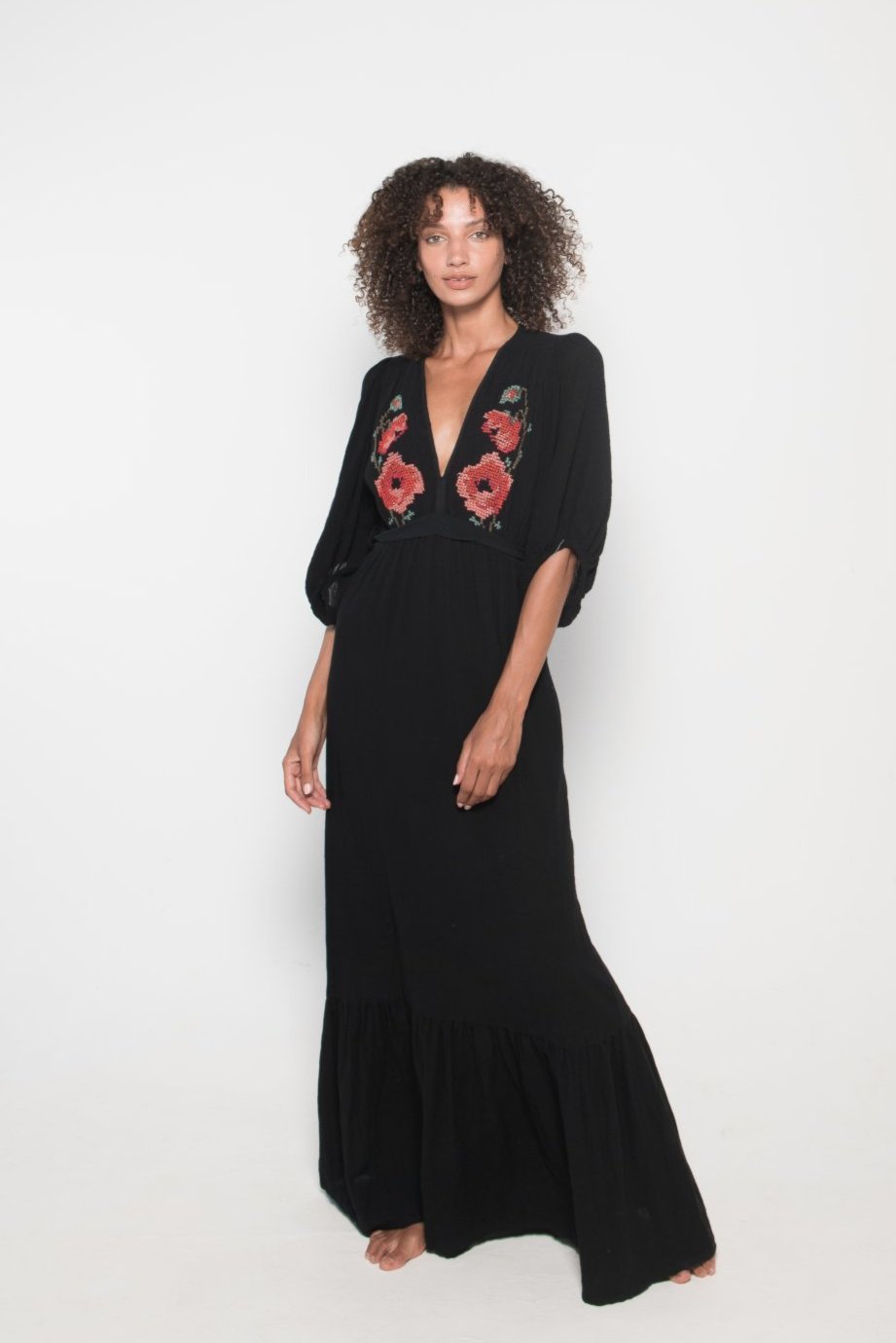
A silk garment may include other fibers or finishing details that impose additional limits. The active Ondina silk dress offers one specific item whose information can be reviewed, but it cannot establish a universal care method for every silk product. Examine the surface for applications, sensitive seams or details that could respond to moisture. When the label specifies a specialized procedure, an improvised household approach may change the drape or leave marks that are difficult to correct. The finished garment matters more than generalized assumptions about the fiber.
Natural drying in the shade is a common delicate-textile approach. If the garment becomes heavy with water, flat drying may reduce stress on shoulders and seams. If the label says hang dry, use an appropriate hanger. Temperature must follow the label. Some fibers and finishes can react badly to excessive steam or pressure. If steam is permitted, keep distance and test carefully.
Friction is important when handling delicate surfaces, especially where a stain or localized dirt is involved. Rubbing forcefully may spread the problem or affect the finish. Permitted temperature and products must come from individual care instructions rather than a general belief that all silk accepts a gentle wash. When a stain's origin is unknown, stopping is safer than combining several cleaning agents. The guide to treating stains on delicate garments provides context for those limits. Care should not begin with an experiment that may permanently change the surface.
Light can affect fibers and dyes. The goal is not to hide silk, but to avoid drying or storing it for long periods under intense light. Store it clean and fully dry. Delicate, bias-cut or heavy pieces may benefit from flat storage instead of months on a hanger. Vestido Ondina Seda is a reminder that storage and drape belong to the same care conversation.
During drying, weight and shape deserve attention. Certain constructions may distort when supported incorrectly while wet. Steam should not automatically be treated as safe simply because it avoids direct contact; it still applies heat and moisture. If the label permits a specific treatment, follow its conditions and avoid pressure against applied or raised surfaces. The objective is preserving the intended silhouette rather than achieving a perfectly smooth finish. Creases arising from normal use do not necessarily justify another intervention, especially when the fabric's natural movement is part of its character.
If the label requires it, if the stain is complex or if the garment combines silk with delicate applications, professional care is safer than an irreversible experiment.
Caring for silk does not mean doing more. It means intervening less and with greater precision.
Store a silk garment only when clean and dry according to its permitted care, away from objects that can catch details. Whether folding or hanging is appropriate depends on construction and available space. Before wearing it again, inspect seams and fabric instead of applying steam automatically. For heat-related decisions, see ironing or steaming according to material. A lasting relationship with clothing grows through attentive maintenance without turning every use into an unnecessary cleaning cycle that may introduce further wear.
Vestido Ondina Seda · Vestido Oro Seda · Falda Luz Seda Flecos
Cotton, Linen and Rayon in Warm Weather · How to Care for Artisanal Textiles
No. Individual instructions take priority.
No. Composition and construction may impose restrictions.
A.03 / JOURNAL / SELECTION
Pieces that continue this story.
New editions, pieces, places, craft and ways of living.