01
What to Wear to Weekend Brunch Without Looking Overdressed
How to build a brunch look around one favorite piece, proportion, layering and enough ease to continue through the rest of the day.
Leer artículo
A guide to how cotton, linen and rayon differ in touch, drape, weight and use in warm-weather clothing.
Cotton, linen and rayon can all work in warm weather, but they do not create the same experience. Fiber matters, but so do weave, weight, finish and construction. That is why rules such as “linen is always cooler” or “cotton always breathes better” are too simple.
The right material depends on the movement, structure and feel you want from the garment.
Comparing cotton, linen and rayon in warm weather is a way to understand possibilities, not to declare one universal winner. The experience of a garment also depends on yarn, weave, weight, finishing and the way it has been constructed. A light shirt and heavier trousers can share the same fiber while behaving very differently. The composition label is therefore a starting point to read alongside proportions, intended use and care instructions rather than proof that a particular garment will always feel cool.
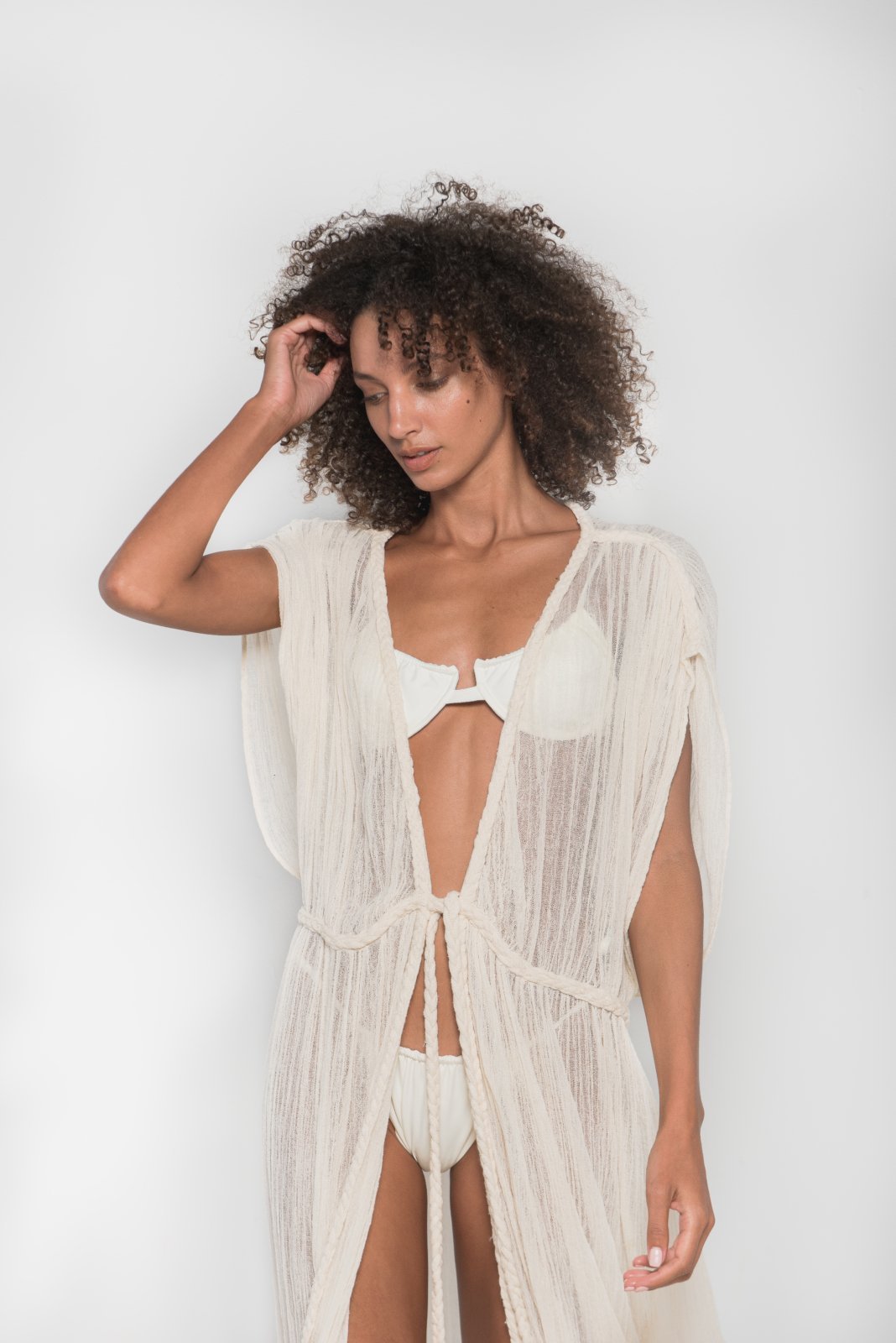
Cotton can feel light, dense, soft, dry or textured depending on how it is woven. On Ruana Cadena, the textile construction is visible and becomes part of the garment’s identity.
Linen often brings visible texture and a crisper kind of drape. It can feel especially useful when a warm-weather garment needs lightness without becoming visually weightless.
Cotton appears in very different textiles: some are light and open, others dense and structured. It is not possible to predict how a finished garment behaves from the fiber name alone. When choosing a shirt, observe construction and the way it falls around the shoulders; in trousers, weight and volume matter too. Photographs help interpret the design, but cannot replace product information. Two garments sharing a composition may still require different maintenance because of weave, embroidery or finishing. The relationship between material and silhouette always deserves consideration as a whole.
Rayon can create a softer, more continuous drape than cotton or linen. That makes it useful in garments where movement is central to the silhouette.
Linen is often associated with a particular texture, but it does not behave identically in every garment. An open construction may feel different from a denser one, and finishing changes how the surface looks in motion. Creasing cannot simply be labeled a universal advantage or defect: some people appreciate the texture while others prefer a smoother appearance. What matters is understanding how the garment looks and how it will be maintained during ordinary use. Individual specifications and real-world wear provide better guidance than a general recommendation based solely on the name of the fiber.
There is no universal answer. Weave, thickness, finish and the intended use matter as much as fiber name.
If you want more texture and presence, cotton or linen constructions may work better. If you want more fluidity, rayon can be useful. The decision should follow the garment, not a hierarchy between fibers.
Rayon may appear in garments with fluid drape, but fluidity should not be confused with tolerance for every condition. A fabric can move beautifully while requiring care during washing or drying. Its finished appearance depends on the fiber as well as density, construction details and cut. Wide trousers and dresses may benefit from movement, yet the choice must be evaluated through the actual product. For broader criteria, read recognizing the quality of an artisanal textile, which separates composition, technique and finishing without applying one assumption to every garment.
Heat and humidity can increase wear. Always follow the specific care guidance for the piece.
Pantalón Hermès, Kimono Tao and Ruana Cadena show three different ways material can support movement, layering and volume.
Read How to Recognize a Quality Artisanal Textile.
There is no “best material” in the abstract. There is the right material for a construction, a climate and a way of wearing it.
Before buying for a warm destination, consider where the garment will be worn and what maintenance routine is realistic. Clothing for hours of walking and something intended for dinner may demand different qualities. Check washing and drying instructions along with the construction of decorative details; general guidance about cotton or linen cannot replace the individual care label. Style matters too: length and volume can change comfort as much as fiber choice. When two options respond to the same climate, the better one is the garment whose form, care and practical use fit the person.
Pantalón Hermès · Kimono Tao · Ruana Cadena
Why Handmade Clothing Can Cost More · Made by Hand in Mexico
No.
It can, depending on construction and finish.
Weave, weight, drape, care and construction.
A.03 / JOURNAL / SELECTION
Pieces that continue this story.
New editions, pieces, places, craft and ways of living.