01
What to Wear to Weekend Brunch Without Looking Overdressed
How to build a brunch look around one favorite piece, proportion, layering and enough ease to continue through the rest of the day.
Leer artículo
How to wash, dry and iron cotton more carefully so color, drape and structure last longer.
Cotton may seem simple, but care depends as much on weave and finish as on fiber content. In La Troupe product guidance, the general approach is clear: delicate cycle, cool or lukewarm water, mild detergent, no chlorine and preferably shade drying.
The specific label still comes first. Embroidery, print, color and fiber blends can all make one cotton garment more delicate than another.
Preserving the shape and color of cotton clothing involves more than identifying the main fiber. Fabric weight, dyes, seams and finishes influence appropriate care. A structured cotton dress can require different decisions from a light layer even when their composition is similar. The individual care label remains the primary reference before washing, drying or ironing. The aim is not to guarantee that a garment will never change, but to avoid interventions likely to disturb its construction or appearance during ordinary use.
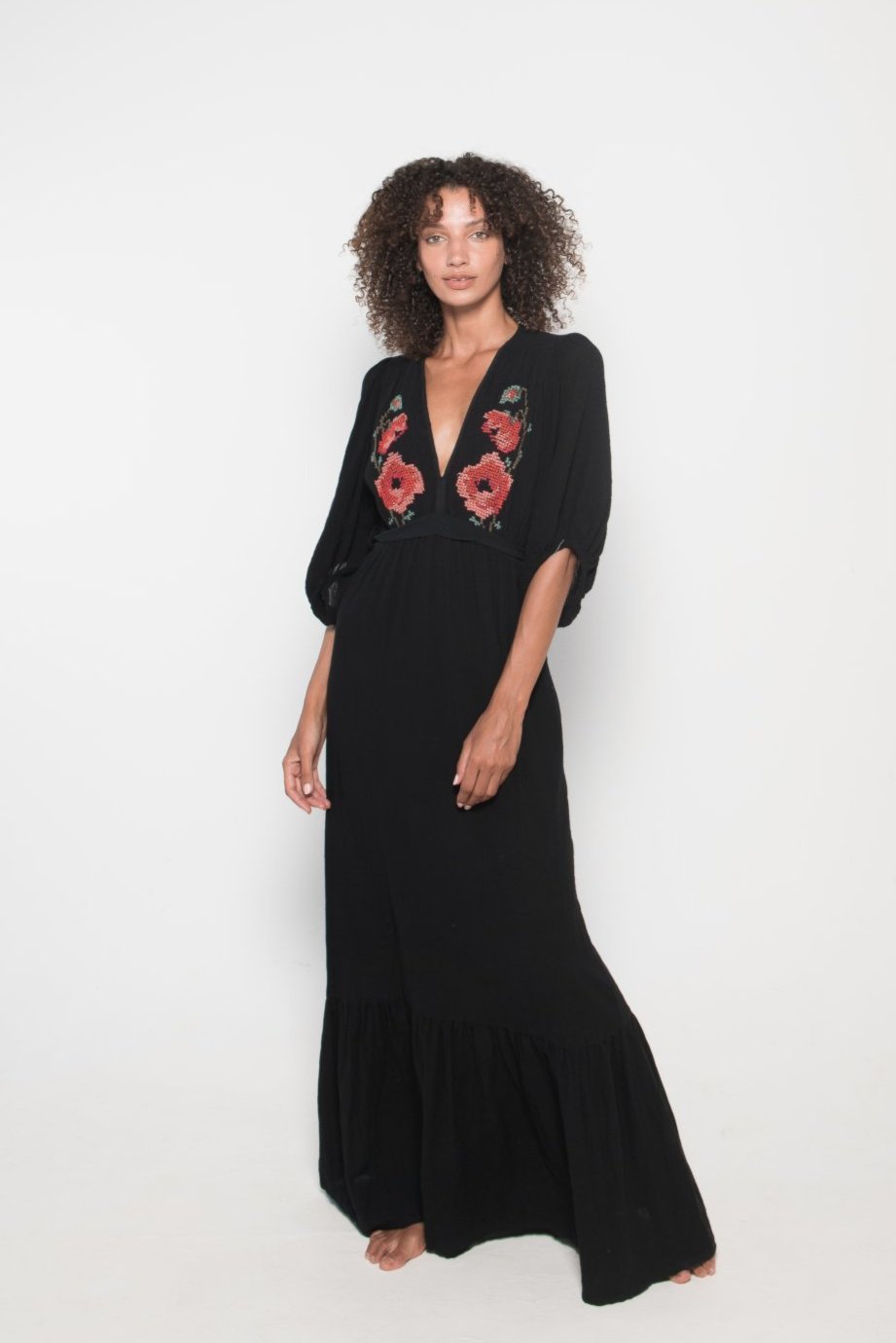
A gentle cycle reduces unnecessary friction and distortion. Effective cleaning does not always require the hottest water or strongest cycle. Vestido Sándalo is a good example of why a cotton silhouette deserves to keep its drape, not simply come out “clean.” La Troupe recommends mild detergent and avoiding chlorine or strong bleaching agents. That matters even more for intense colors, prints, embroidery and finishes.
Cotton composition does not make clothing resistant to every temperature or cleaning product. Dyes and finishes may impose important limits, as can embroidery and applied details. The active Sandalo dress is documented as cotton, but its individual care instructions must be checked. Before washing, look for contrasting colors, raised areas and restrictions on particular treatments. Good maintenance begins with that information rather than relying on one rule for all natural fibers. What matters is the finished object's construction and the way it is used.
La Troupe’s cotton guidance may allow low-heat tumble drying for some pieces, but shade drying is the safer general approach. Dryer heat adds thermal stress and can accelerate dimensional changes in some constructions. For cotton, La Troupe indicates medium heat and recommends ironing from the reverse when embroidery or prints are present.
Sorting colors and avoiding aggressive treatment can be reasonable precautions when the care label permits them, but they do not replace checking each piece. An unsuitable cleaning agent or bleach may change a finish or surface. Friction against embroidery deserves attention as well. If a garment begins transferring color, stop before spreading the problem. The guide to caring for strong colors helps distinguish color appearance from specific care conditions. An attractive shade is not proof that any household washing technique will preserve it.
GINETEX recommends sorting garments by color and treatment type. A separate first wash can be especially useful for new, strongly colored textiles. If a garment includes hand embroidery, applications, delicate construction or uncertain color behavior, hand washing may reduce friction.
Final shape also depends on drying. Not every cotton garment permits tumble drying, and hanging a wet piece in an unsuitable way may affect its proportions. Follow individual instructions for supporting weight and avoiding distortion. Before ironing, check for details vulnerable to pressure or heat. A desire for a smooth surface does not justify flattening intentional texture. Inspecting the hem, sleeves and seam areas after drying provides useful evidence of how the garment responds to its maintenance routine, instead of focusing only on whether visible creases have disappeared.
Before drying, gently return the garment to its intended shape. Align seams, hems and shoulders while damp instead of trying to correct everything later with heat.
Cotton lasts better when we stop treating it as indestructible.
A useful care routine needs to be repeatable without turning every wash into an experiment. Keeping the care instructions available and acting cautiously with unknown stains reduces improvised decisions. When changes in color or texture appear, seek specific information before intensifying treatment. Clothing gains value when it can be worn and maintained in a way compatible with everyday life. There is no need to promise unlimited durability to explain why considered handling may help preserve the garment's intended form and appearance.
Vestido Sándalo · Ruana Cadena · Top Fuego Red
Explore more textile-care guidance
Cotton, Linen and Rayon in Warm Weather · How to Care for Artisanal Textiles
Yes. Material and construction determine treatment.
Only when the specific care instructions permit the method.
A.03 / JOURNAL / SELECTION
Pieces that continue this story.
New editions, pieces, places, craft and ways of living.