01
What to Wear to Weekend Brunch Without Looking Overdressed
How to build a brunch look around one favorite piece, proportion, layering and enough ease to continue through the rest of the day.
Leer artículo

How to choose hanging, folding or flat storage for fluid garments, ruanas and kimonos while preserving their shape.
A garment can distort in the wardrobe without ever entering a washing machine. Weight, narrow hangers, permanent folds and pressure between pieces can change shoulders, hems and texture.
Storing fluid clothing means understanding which parts of its construction carry the weight. In a kimono, ruana or long layer, the choice between hanging and folding can affect how tension is distributed for weeks. The care label offers the first reference, followed by dimensions and the garment's details. A well-organized wardrobe allows clothing to return to use without correcting distortions caused by storage. There is no one method appropriate for every open or generous silhouette.
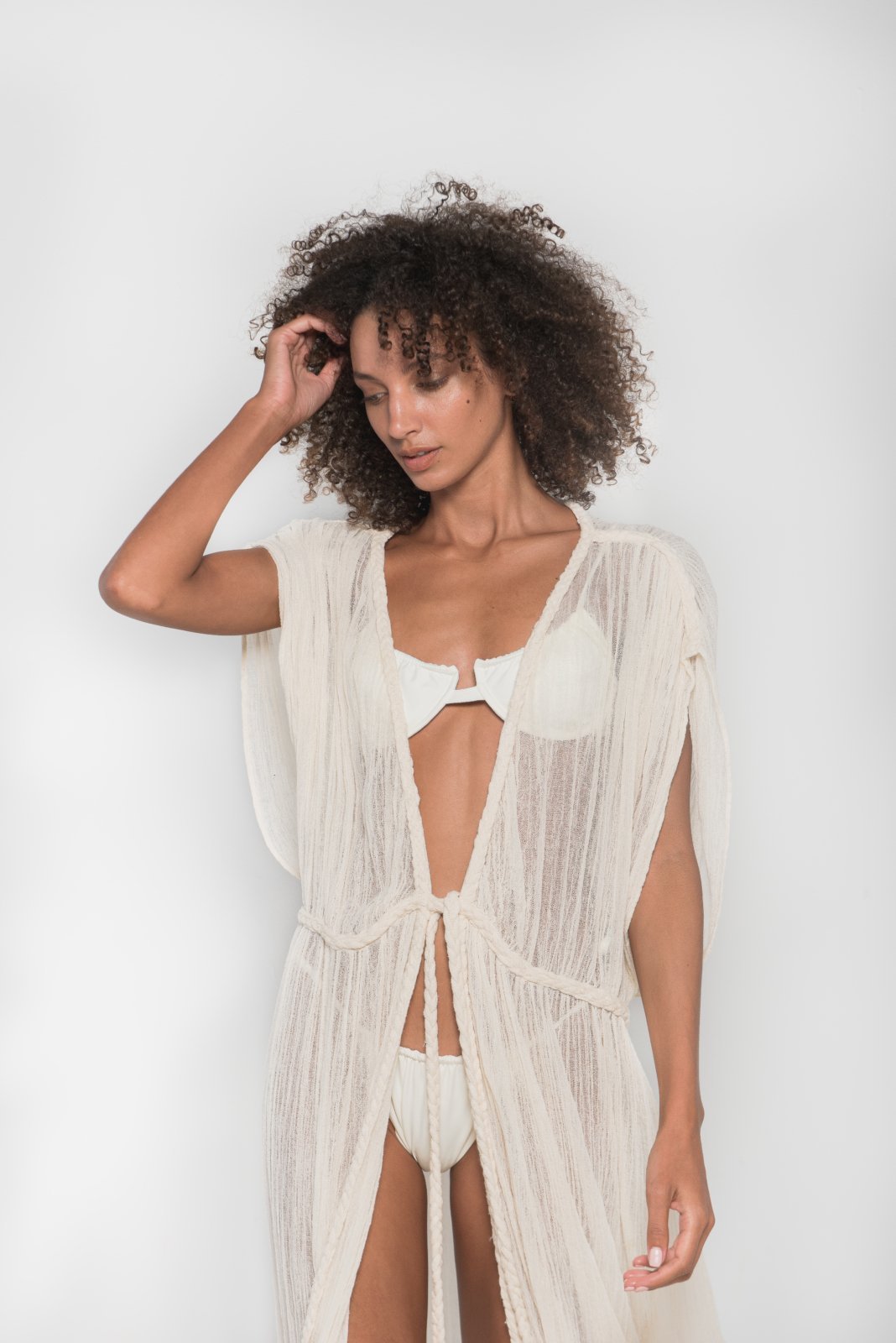
Light kimonos can hang well when the hanger supports the shoulder width. Heavy ruanas or garments with a lot of textile may benefit from folded or flat storage so gravity does not stretch them. A hanger that is too narrow can create points at the shoulders. Avoid hanging open garments from one fragile loop or a single narrow point.
A hanger concentrates part of the weight around the shoulders, whereas folding distributes material in another position. The decision depends on construction and individual instructions, not simply on the names kimono or ruana. The active Cadena ruana provides an example of an enveloping garment to assess through its actual dimensions. When a long layer remains hanging for an extended period, inspect whether the support maintains its form. If fabric stretches or the hem changes, the storage approach should be reconsidered rather than accepted as inevitable.
If a ruana or embroidered piece is folded, avoid placing a hard fold directly across raised work. At home, the most important priorities are reducing pressure and avoiding trapped moisture. The wardrobe should not compress kimonos, velvet or embroidery. Constant pressure can mark surfaces and distort lightweight layers.
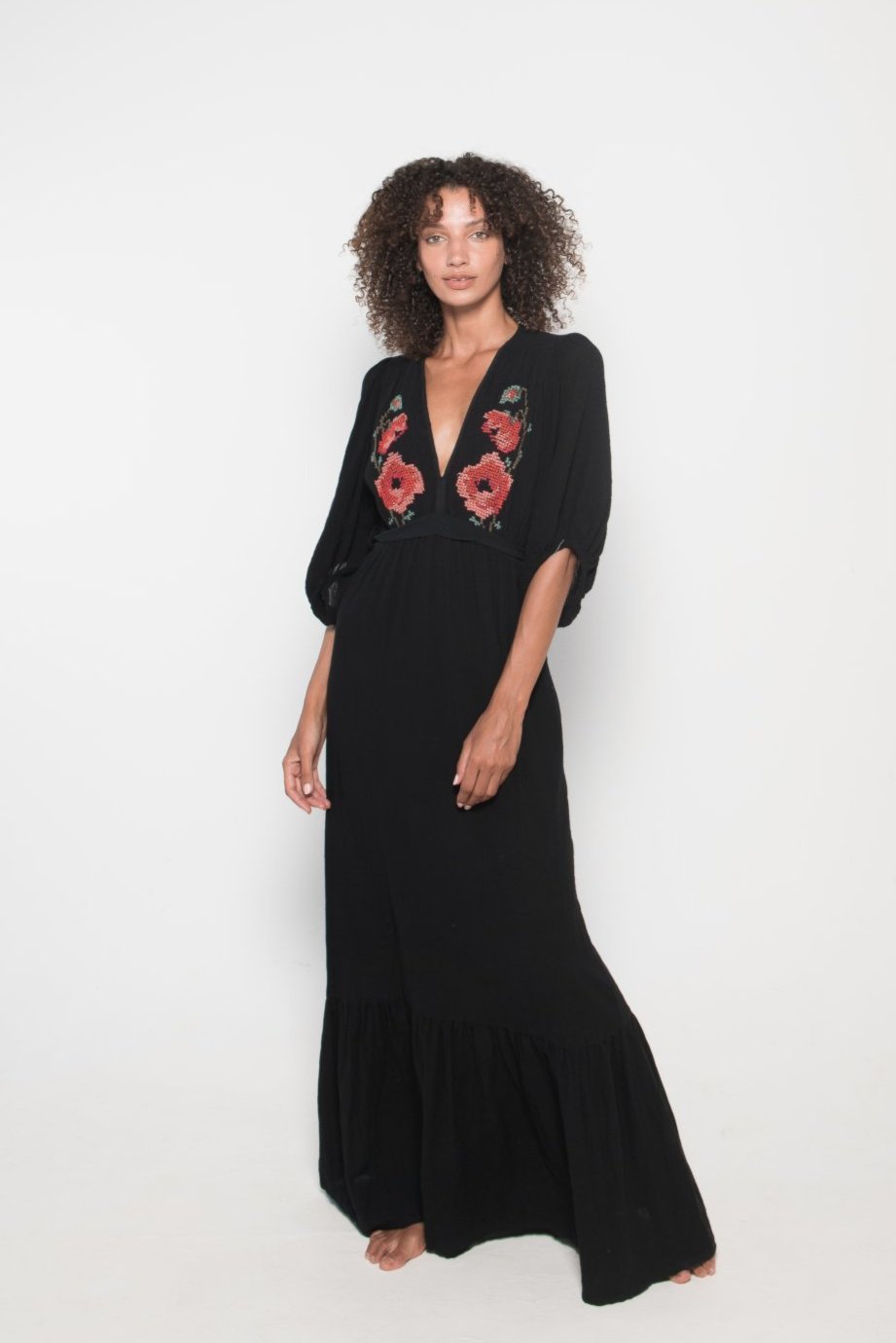
Embroidery and applied details should not remain under unnecessary pressure. Raised surfaces may become marked when compressed against belts, closures or hard accessories. When the care label permits folding, place creases with attention to where details are located and which parts will support the weight. The active Trenza kimono demonstrates why sleeves and length matter. The guide to caring for artisanal embroidery explains how tension points affect both handling and storage. Thoughtful protection is different from forcing the textile into a small space.
Dirt, moisture and pests are major textile risks. Before storing a piece for months, make sure it is clean and completely dry. A rack beside a sunny window may work for short-term use but is not ideal for long storage of intense colors or delicate textiles.
Long-term storage should never become a way to hide a damp or stained garment. First, clean it only according to the permitted procedure and allow it to dry fully, including seams and layered sections. Spraying unverified products merely to create a particular scent before closing a box is not a substitute for care. Ventilation and separation from rough surfaces may matter more than decorative closet accessories. The purpose is maintaining a suitable condition for the next use rather than creating an elaborate storage ritual that offers no practical benefit.
Do not forget stored garments for an entire year. Periodic inspection can catch moisture, insects, pressure marks or deep folds early. Ruana Cadena shows why an open textile garment needs room to preserve its shape. If a garment will remain unused for months, avoid sealing in residual moisture. A breathable cover and a clean space make inspection easier. For folded textiles, slightly changing the fold lines over time can reduce repeated stress on the same area.
When clothing has been stored for several months, inspect the hem, shoulders, surface and details before wearing it. If a pressure mark appears, do not automatically apply steam: first determine whether the material tolerates heat and moisture. The guide to ironing or steaming by material explores this precaution. Useful storage need not rely on many rules; it requires recognizing which features might change and avoiding conditions that concentrate stress repeatedly in the same place. A garment is preserved so that it can return naturally to everyday wear.
Good storage lets a garment keep the shape it will need when it returns to the body.
Ruana Cadena · Kimono Trenza · Kimonos
Continue with the related guide
How to Dry Delicate Clothing · How to Care for Artisanal Textiles
It can be when its weight would stretch it on a hanger.
It depends on weight and construction; use a hanger that supports the shoulders correctly.
No.
Care note: adapt storage to the construction of the piece.
A.03 / JOURNAL / SELECTION
Pieces that continue this story.
New editions, pieces, places, craft and ways of living.