01
What to Wear to Weekend Brunch Without Looking Overdressed
How to build a brunch look around one favorite piece, proportion, layering and enough ease to continue through the rest of the day.
Leer artículo
Ruanas and ponchos may look similar, but they differ in openness, drape, movement and layering. This guide explains how to choose.
Ruanas and ponchos belong to the same conversation about layering, but they do not create the same relationship with the body. A ruana is generally more open, enveloping and adaptable; a poncho tends to build a more closed shape around the torso.
Choosing between them depends on movement, openness and the way you want to layer.
Ruanas and ponchos are often grouped together as enveloping clothing, but their construction is not necessarily identical. A ruana commonly allows a more flexible opening, while many ponchos are built around an opening for the head. The precise form depends on each design and can change how a garment moves and what remains visible underneath. Before choosing, consider these differences and the activity for which an outer layer is needed, without assuming either category works for every body.
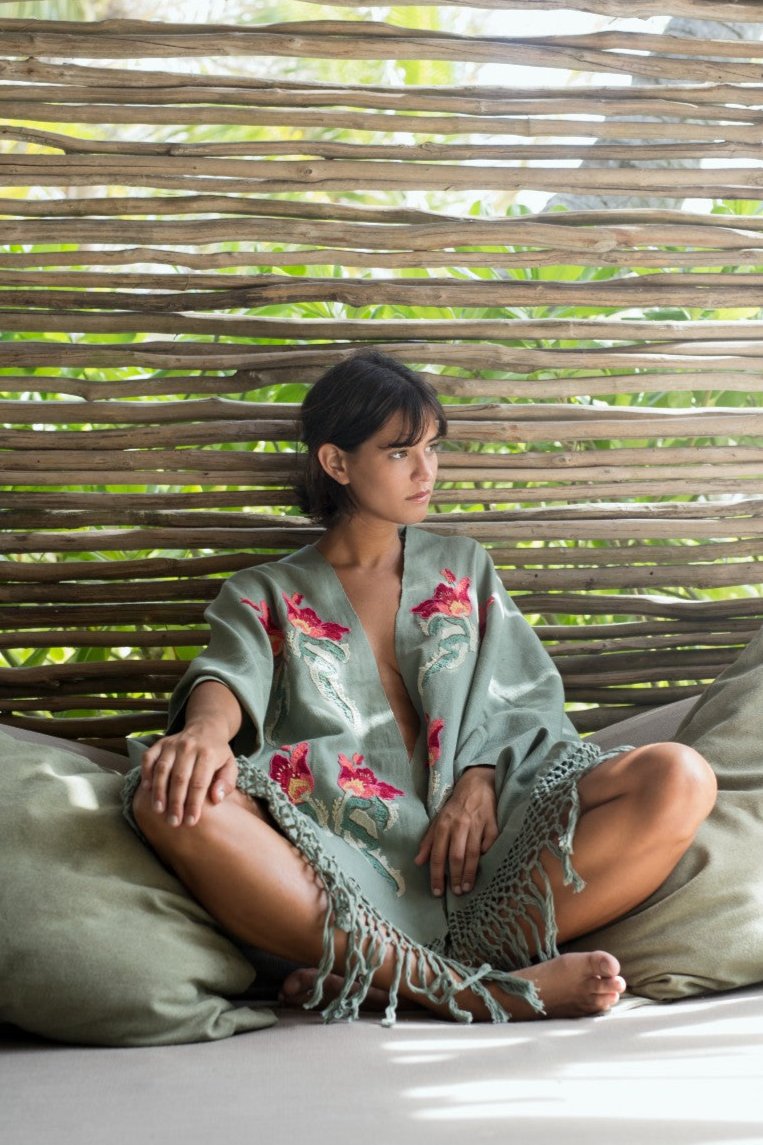
An open ruana keeps the base visible. It can fall straight, wrap partially or shift as the body moves.
Ruana Cadena, documented as a one-size unisex piece in 100% cotton, uses that open construction to let textile and drape remain visible.
The opening influences how a garment can be arranged. A ruana may wrap in several ways, but models vary considerably in cut and length. Many ponchos cover the torso from a central opening, although individual interpretations can differ. No general definition replaces the actual product description. The active Cadena ruana offers one example for assessing dimensions and position on the body. Comparing real garments makes it easier to recognize which characteristics will be useful and which may become inconvenient during movement.
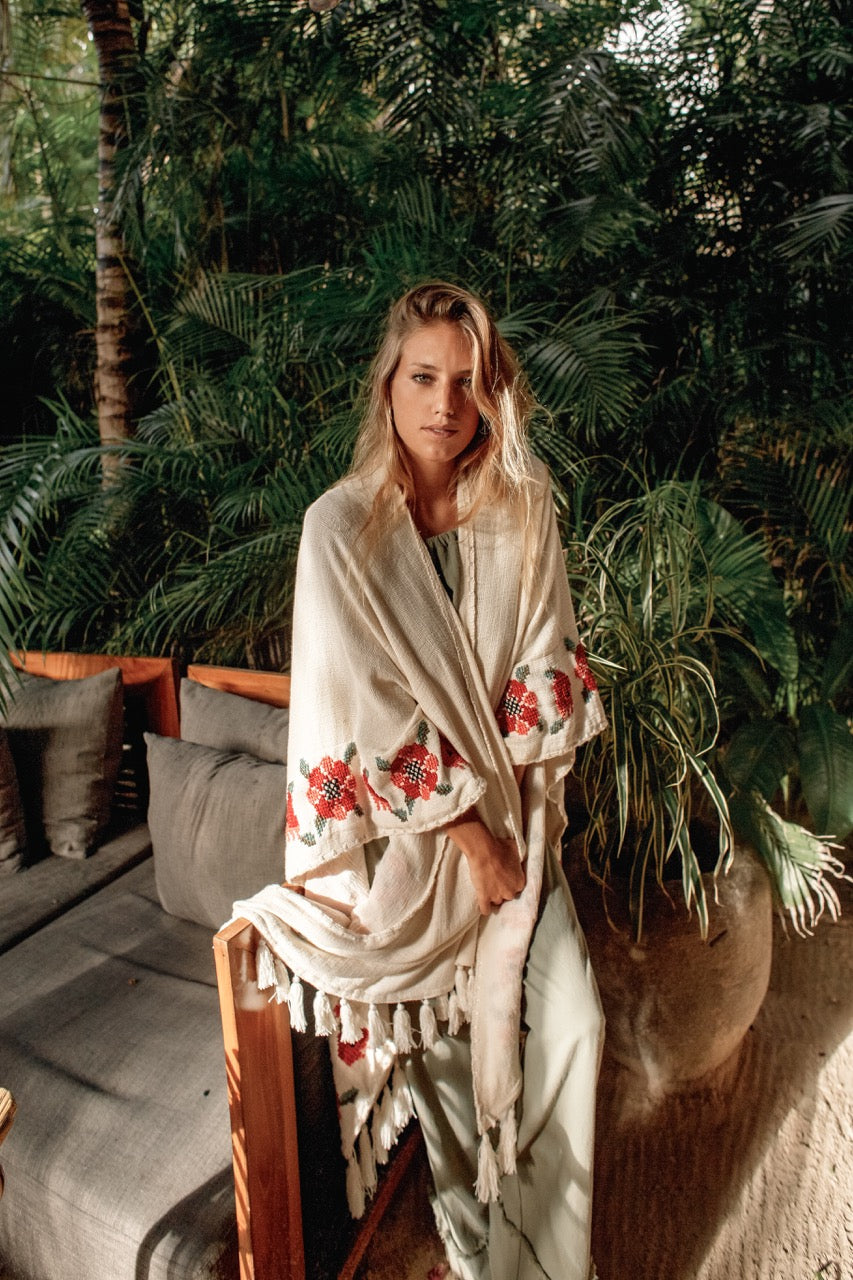
Much of the ruana’s effect appears in motion. The surface opens, folds and wraps, making textile especially visible.
Both can work, but the ruana offers more editing possibilities because the base stays visible.
Walking in an enveloping layer involves observing how the textile is distributed. An open ruana may shift with the wind and need rearranging when sitting, while a more closed poncho can interact differently with the arms. Volume does not guarantee warmth, and something that looks lightweight is not necessarily compact in a suitcase. Try carrying a shoulder bag or walking up stairs, and notice whether the garment remains comfortable. A still photograph cannot establish practical use in every circumstance. Actual intended use should lead the choice.
An open construction often adapts more easily across bodies, which is why ruanas can fit naturally inside an Unisex wardrobe.
Look at length, width, material and how dominant you want the layer to feel. Ruana Tulum and Ruana Eden offer different expressions of texture and layering.
Sharing a ruana does not mean it creates an identical silhouette on each person. Width, length and the location of volume change with height and the clothes underneath. Someone wearing wide trousers may find that a very long outer layer adds fabric around the legs, whereas a dress may create a different proportion. For more background, read what a ruana is. Flexibility is valuable when different interpretations remain comfortable and do not depend on arranging the piece in only one way. Measurements are essential even for open garments.
The distinction becomes clearer when you stop looking at the garment as a static object. A ruana can open, slide and settle around the body; a poncho usually maintains a more constant overall form.
Read What Is a Ruana? and Ruana vs. Kimono.
The most important difference is not the name. It is how the garment opens, wraps and moves around the body.
The best starting point is the clothing already worn. One person may want a layer for cooler interiors, while another wants to change a silhouette for dinner. In either case, check composition, individual care requirements and dimensions before buying. The ruana category contains different constructions, and a dedicated commercial edit may help identify possible combinations. The editorial decision, however, begins with the actual body and setting rather than declaring a universal winner between two garment types. Good styling should make everyday activities easier, not more complicated.
Ruana Cadena · Ruana Tulum · Ruana Eden
How to Repeat an Artisanal Garment · What Makes a Garment Truly Unisex?
Not necessarily. Their openings and drape often differ; check the individual design.
It depends on folded volume, care and intended use.
A.03 / JOURNAL / SELECTION
Pieces that continue this story.
New editions, pieces, places, craft and ways of living.