


 01
Dressing the City Through a Mexican Point of View
A reflection on how La Troupe carries fluid silhouettes, craft and a sensibility born in Mexico into a contemporary urban wardrobe.
Leer artículo
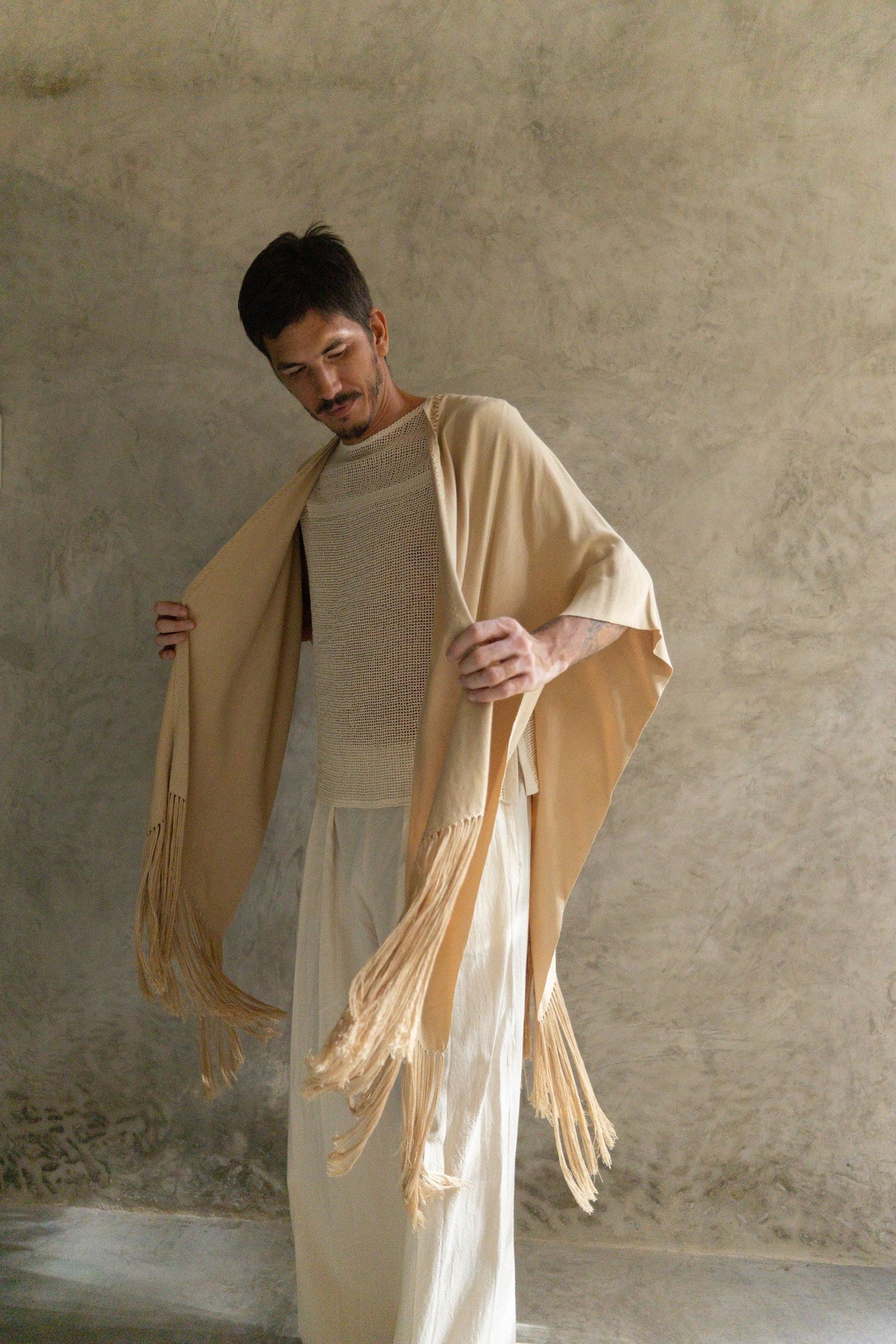
A backstrap loom is a manual weaving system in which the tension of the loom is directly connected to the weaver’s body. That condition makes process, rhythm and hand control part of the textile result.
It is a traditional weaving system that uses the weaver’s body as part of the loom tension. The technique exists across different communities and cultural contexts; any specific attribution should come from documentation for the individual piece.
Manual tension control can create a surface with its own character. Texture, density and small variations can become visible evidence of the process.
Because technique does not end at the surface. It can affect drape, weight, flexibility and the relationship between textile and body.
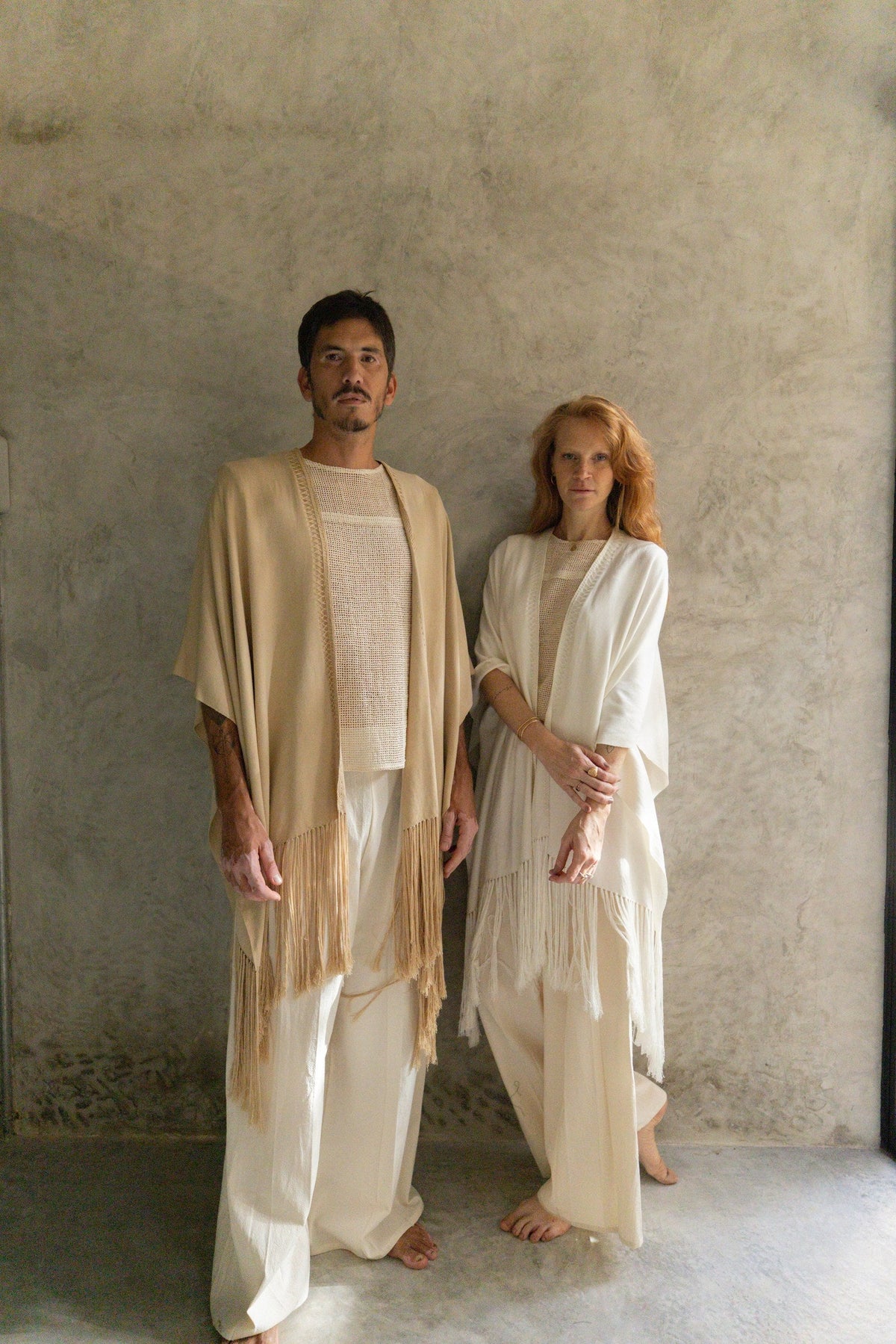
In La Troupe’s Ruana Cadena, cotton woven on a backstrap loom forms an open, enveloping silhouette, with hand stitching around the edge.
For this piece, yes. Its product description specifically documents small weaving variations as a natural part of the artisanal process.
When technique builds the surface, it also builds the way the garment moves.
Give the texture room to read. A simple base allows the weave, drape and hand-finished edge to become visible.
Continue through Savoir-Faire and What Is a Ruana?.
Ruana Cadena · Ruana Tulum · Ruana Cuzco
How to Recognize a Quality Artisanal Textile · What Is a Ruana?
Yes. Tension and weaving are controlled manually throughout the process.
No. It must be confirmed product by product.
Yes. Its product page documents 100% cotton, backstrap loom construction and hand stitching around the edge.
How to Recognize a Quality Artisanal Textile
What to look for in an artisanal textile: fiber, weave, finishing, variation, origin information and the relationship between technique and design.
Read more
Latidos: The Silhouettes Behind the Collection
An editorial reading of Latidos through dresses, skirts, trousers, kimonos and layers, and how silhouette creates rhythm across a collection.
Read more